What Does It Mean When a Water Meter Runs Backwards?
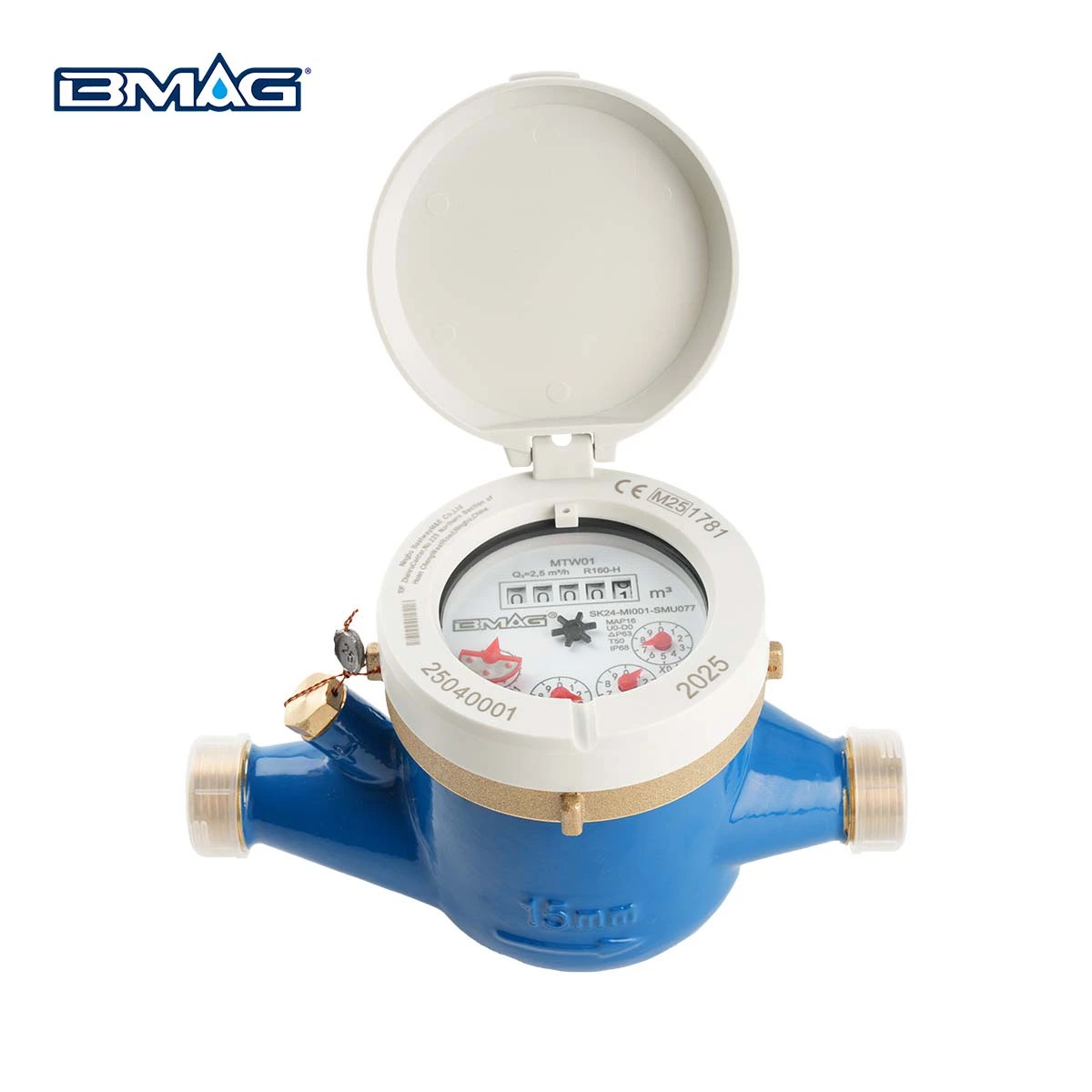
A জলের মিটার running backwards means that water is flowing through the meter in the opposite direction from normal usage, causing the meter to register reverse flow.
Different types of water meters may show different signs:
- Mechanical water meters: The pointer, register, or counting mechanism rotates backwards, and the accumulated reading may decrease.
- Smart/electronic water meters: They may record negative flow, reverse pulses, or separate reverse-flow data even if the accumulated reading does not directly decrease.
Occasional short-term reverse flow may have little impact. However, frequent or continuous reverse flow can distort metering and water-use data, increase meter wear, and sometimes indicate problems within the water supply system that require further investigation. Therefore, when a water meter runs backwards, the key is to determine what is causing the reverse flow and whether it is temporary or persistent.
Below are 5 most common reasons why a water meter may run backwards.
1. Incorrect Water Meter Installation
Specific Causes
- The meter is installed in the opposite direction to the actual water flow.
- Improper installation or incorrect pipe connections.

Signs and Troubleshooting
Reverse operation caused by incorrect installation usually has several noticeable characteristics:
- The meter runs backwards continuously rather than moving backwards only occasionally.
- The reverse movement has no clear relationship with water usage or changes in supply pressure.
- Check the flow-direction arrow on the meter body and confirm that it matches the actual direction of water flow.
- If the installation direction is correct but the meter continues to run backwards, inspect the pipe connections and the internal condition of the meter.
Solutions
- Reinstall the meter according to the flow-direction arrow and actual water flow.
- Correct misaligned or improper pipe connections to avoid excessive stress on the meter.
- Repair or replace the meter if its internal components are damaged.
For applications where reverse installation needs to be prevented from causing reverse registration, a bi-directional anti-reverse water meter can also be considered. Unlike conventional mechanical water meters, this type of meter uses a bi-directional transmission mechanism. Whether the meter is installed in the normal or reverse direction, the register continues to rotate forward and the accumulated reading only increases, preventing the reading from decreasing due to reverse installation.


2. Missing or Failed Check Valve
Specific Causes
A check valve (non-return valve) is designed to restrict the direction of water flow. When reverse pressure occurs, it closes automatically to prevent downstream water from flowing back.

Its backflow-prevention function can be compromised when:
- No check valve is installed.
- The valve disc or internal mechanism is stuck by scale, rust, or other debris.
- Seals are aged or damaged.
- The valve is worn, does not close completely, or closes too slowly.
When pressure conditions change and the downstream pressure becomes higher than the upstream supply pressure, water can flow backwards through the meter, causing it to run in reverse.
Signs and Troubleshooting
Reverse flow caused by a check valve problem often shows the following signs:
- The water meter moves backwards when no water is being used.
- Reverse movement becomes more noticeable when supply pressure changes significantly.
- Check whether a check valve is installed downstream of the water meter.
- Inspect the check valve for sticking, poor sealing, or failure to close properly.
Solutions
- Install a check valve in an appropriate location if one is not already installed.
- Remove scale, rust, and other debris from the valve.
- Replace the check valve if its seals have failed or the valve is severely worn or damaged.
- For plumbing systems with frequent pressure fluctuations, select a check valve suited to the actual operating conditions.
3. Backflow Caused by Pressure Fluctuations
Specific Causes
When the pressure on the two sides of a water meter changes and the downstream pressure becomes higher than the upstream supply pressure, water can temporarily flow backwards through the meter.
Common causes include:
- Municipal water supply pressure fluctuations.
- Starting and stopping of secondary water supply pumps.
- Rapid valve opening or closing and water hammer.
- High-level water tanks, hot-water systems, or other conditions that create higher pressure on the user side than on the supply side.
Signs and Troubleshooting
- Check whether the meter reverses intermittently or moves back and forth.
- Observe whether the reverse movement corresponds with peak water-use periods or pump operating times.
- Close the main inlet valve and observe whether reverse flow continues.
- Check for water hammer, banging, or other unusual pipe noises.
Solutions
- Install a check valve to prevent reverse flow.
- Install a water hammer arrestor when water hammer is significant.
- Contact the property manager or water utility to investigate abnormal supply pressure.
4. Air Trapped in the Pipes
Specific Causes
Air trapped inside the plumbing system can be repeatedly compressed and released by the water flow, causing the meter’s internal impeller to rotate forward and backward.
Common causes include:
- Water supply restoration after a shutdown.
- Air entering the pipes after plumbing repairs.
- Air accumulation in long pipelines or pipes with significant changes in elevation.
- Air trapped in water heaters or water storage equipment.
Signs and Troubleshooting
- The meter shows a noticeable forward rotation–stop–reverse rotation
- The pointer or impeller moves over a relatively large range.
- Gurgling or bubbling sounds can be heard in the pipes.
- A large amount of air escapes when a faucet at a high point in the system is opened.
- Reverse meter movement improves noticeably after the trapped air is released.
Solutions
- Open a faucet at a high point in the plumbing system to release trapped air.
- Optimize the pipe layout to reduce areas where air can accumulate.
- Install an automatic air release valve where necessary.
5. Backflow from Other Pressurized Water Sources
Specific Causes
If another water source on the user side is connected to the municipal water supply and operates at a higher pressure, it can force water backwards through the meter.
Common sources include:
- Solar water heaters.
- Elevated water tanks or water towers.
- Groundwater wells and well pumps.
- Irrigation systems equipped with booster pumps.

Signs and Troubleshooting
- The meter runs backwards during specific periods or when certain equipment is operating.
- Check whether multiple interconnected water sources are present.
- Inspect how water storage equipment and other water supply systems are connected to the municipal supply line.
Solutions
- Install an appropriate backflow prevention device.
- Physically separate different water supply systems.
- Optimize pipe connections to prevent higher-pressure water sources from flowing back toward the municipal supply.
উপসংহার
A water meter running backwards does not necessarily mean the meter is faulty. Identifying the source of reverse flow is the key to choosing the right solution and maintaining accurate water metering.
Visit our website for more practical guides and technical insights on water meters, metering, and water system applications: https://www.bmagmeter.com/