Medidor de agua de chorro múltiple

Categorías
¡Ponte en contacto ahora!

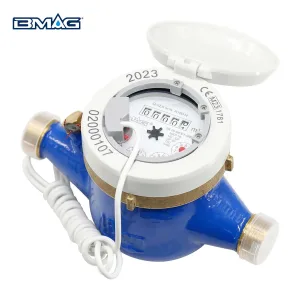


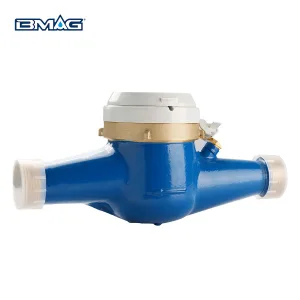
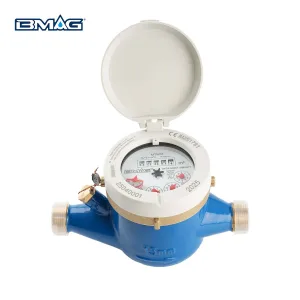
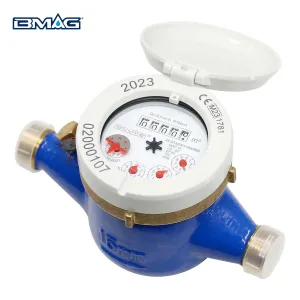
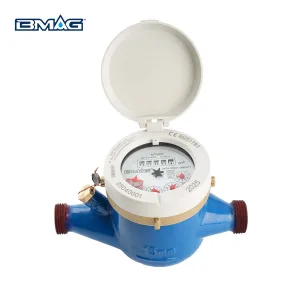
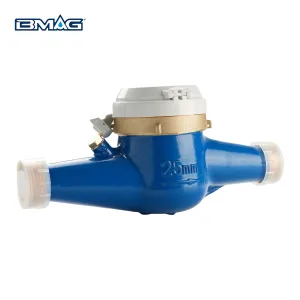

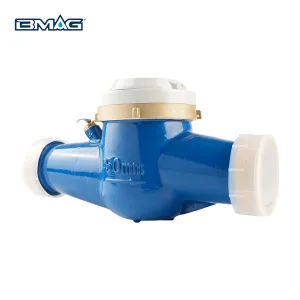

Adquiera el contador de agua perfecto para su proyecto.
En BMAG METER llevamos más de 25 años fabricando contadores de agua y nuestra experiencia en el sector habla por sí sola. Ofrecemos contadores de agua con todas las tecnologías disponibles en el mercado para diversos usos: doméstico, agrícola e industrial.

What is Multi-Jet Water Meter?
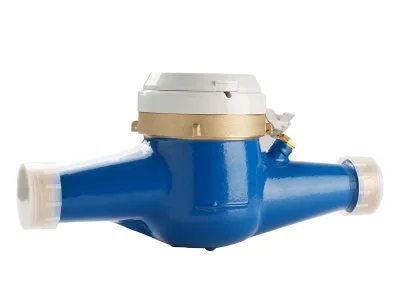
The multi-jet water meter is the most common velocity-type water meter. “multi-jet” represents multiple water inlets, which can make the flow more uniform and the measurement results more accurate.
Multi-Jet Water Meter Principle
The core working principle of the multi-jet water meter is to use multiple water inlets to evenly introduce water flow into the metering chamber and drive the impeller to rotate. The water consumption is displayed by using the combination of differential gears.
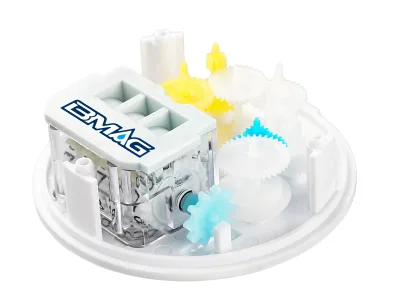
BMAG Meter's Multi-Jet Water Meter Advantages
Alta precisión: Multiple jets distribute water flow evenly onto the impeller, ensuring balanced forces. This reduces metering errors and maintains good accuracy, especially at low flow rates.
Good Durability: The multi-jet design distributes wear evenly on the impeller bearing, extending service life. It’s also less sensitive to small impurities, reducing the risk of clogging or damage.
Cost-effective: Multi-jet meters are generally more expensive to produce, while single-jet meters are typically a lower-cost option.
Differences Between Multi-Jet Water Meters and Single-Jet Water Meters
Structure: Multi-jet water meters use multiple inlet ports for balanced impeller impact, unlike single-jet meters which use a single tangential inlet.
Lifespan: Multiple-jet water meters typically offer a longer lifespan due to more even wear on components, whereas single-jet meters are prone to faster, uneven wear.
Cost-effective: Multi-jet meters are generally more expensive to produce, while single-jet meters are typically a lower-cost option.
Multiple Jet Water Meter Parameters
Types of Multi Jet Water Meters
Classified by medium temperature: Cold multi-jet water meter y Hot multi-jet water meter
Classified by counter structure: Wet-dial meter, Dry-dial meter, y Liquid-sealed register meter
Material of Multiple Jet Water Meters
Brass: Brass is the most commonly used material for water meters, featuring excellent mechanical strength, corrosion resistance and processability.
Bronze: Similar to brass, it has better corrosion resistance, but its cost is slightly higher than that of brass. Fewer water meters choose bronze as the material.
Cast Iron: Cast iron material is usually used for large-diameter water meters (>DN50), with a relatively low cost. However, it is prone to rust and has high requirements for anti-corrosion coatings.
Stainless Steel: Stainless steel water meters have the best corrosion resistance, but they are relatively expensive and difficult to process. They are usually used in Marine and special industries.
El plastico: Plastic water meters typically use reinforced nylon, PPO, etc. Light in weight, rust-free and low in price.
Thread Types of Multi Jet Water Meters
BSP (British Standard Pipe thread): BSPT y BSPP
BSP thread is the most widely used standard for Multi Jet Water Meters
NPT (National Pipe Thread): NPT y NPSM
NPT thread is the national standard pipe thread of the United States and is mainly used in North America
Lifespan of Multi Jet Water Meters
The service life usually provided by Multiple Jet Water Meter manufacturers is between 10 and 15 years.
The replacement life standards vary from different countries, generally ranging from 6 to 15 years.
Size of Multi Jet Water Meters
The general size range of multi-jet water meters is DN15 – DN50
Inch size of multiple-jet water meters: 1/2″ – 2″


Multi-Jet Water Meter Standards
ISO 4064 (International Standard): This is the most core international standard for multi-jet water meters (cold water and hot water).
OIML R49 (Recommended by the International Organization of Legal Metrology) : It is basically consistent with ISO 4064 and serves as the blueprint for many countries to formulate their own multiple-jet meters regulations.
EN 14154 (European Standard) : This is a commonly used multi-jet water meter standard in Europe and is basically compatible with ISO 4064.
MEDIO (EU Measuring Instruments Directive 2014/32/EU): Multiple-jet Water meters sold in the EU market must comply with the MID Directive and bear the CE marking. MID usually refers to EN 14154 as the technical specification.
AWWA C708 (American Water Industry Association Standard) : An American standard for multi-jet cold water meters.
Norma NSF/ANSI 61 (Standard for Health Impacts of Components in Drinking Water Systems): It mainly focuses on the safety of materials in contact with drinking water and is a mandatory or recommended certification in regions such as the United States.
Working Temperature of Multi Jet Water Meters
Cold Multi-Jet Medidor de agua
According to ISO 4064, cold multi-jet water meters are designed for the temperature range:
T30: 0.1 °C to 30 °C (32℉ to 86℉)
T50: 0.1 °C to 50 °C (32℉ to 122℉)
Hot Multi-Jet Medidor de agua
According to ISO 4064, the common temperature grades of hot multiple-jet water meters are:
T70: (30°C or 50°C) to 70 °C (86℉ to 158℉)
T90: (30°C or 50°C) to 90 °C (86℉ to 194℉)
Why Choose BMAG Multi-Jet Water Meter?
Varias opciones de materiales:
Latón, bronce, metal sin plomo,
Hierro fundido, plástico
Alta precisión:
R80 - R100 - R160 - R200
Gran gama de tamaños:
D: ½″ - 2″
Largo: 165 - 300
DN15 - DN50
Alto grado de protección:
IP68 a prueba de agua y polvo
Diseño fácil de usar:
Esfera giratoria de 360° para una lectura fácil
Tecnología de transmisión remota:
Se puede proporcionar salida de pulso
Apoyar la lectura remota
Preguntas frecuentes sobre el medidor de agua Multi-Jet
Su fabricante de medidores de agua de chorro múltiple de confianza con más de 20 años de experiencia en fabricación
BMAG's multi-jet water meters are designed according to ISO 4064 Class B/Class C standards, featuring high-quality lead-free brass/DZR or technical plastic bodies to ensure durability in residential and industrial applications.
El principio de funcionamiento del medidor de agua Multi jet se basa principalmente en el flujo de agua a través de una cámara de medición con múltiples boquillas, que dispersan el flujo de agua en múltiples chorros simétricos que impactan en el impulsor giratorio.
Este diseño permite que el impulsor esté sometido uniformemente a fuerzas desde todas las direcciones, equilibrando mejor las fuerzas que actúan sobre el impulsor y reduciendo el desgaste de las partes móviles y mejorando la durabilidad.
El medidor debe instalarse en posición horizontal con la dirección del flujo indicada por la flecha grabada en el cuerpo del medidor y con el registro hacia arriba.
• La tubería debe limpiarse antes de la instalación;
• El medidor debe estar constantemente lleno de agua durante el funcionamiento;
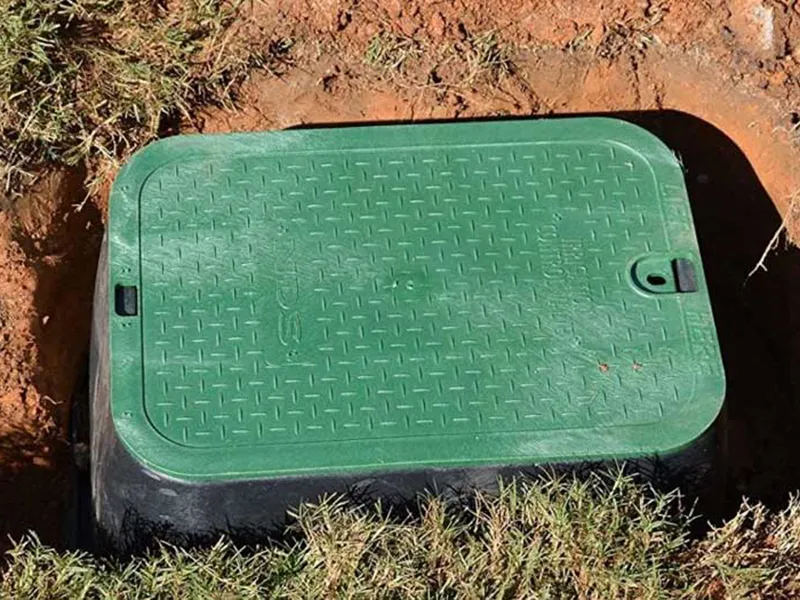
BMAG recomienda instalar el medidor de agua de la siguiente manera y en la caja del medidor de agua:
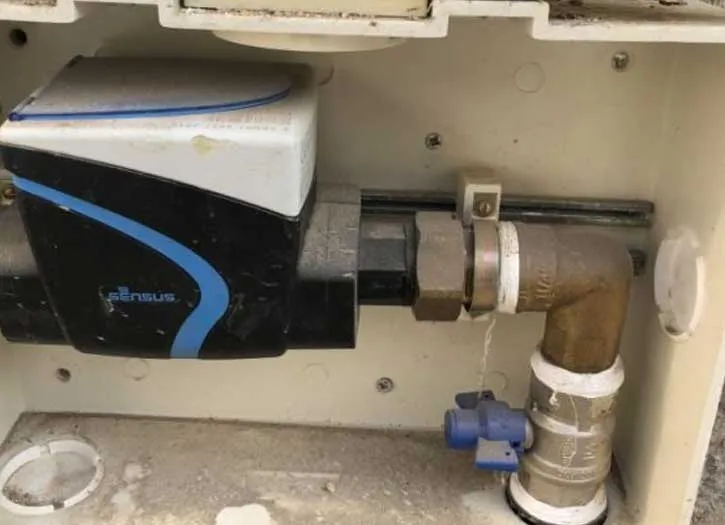
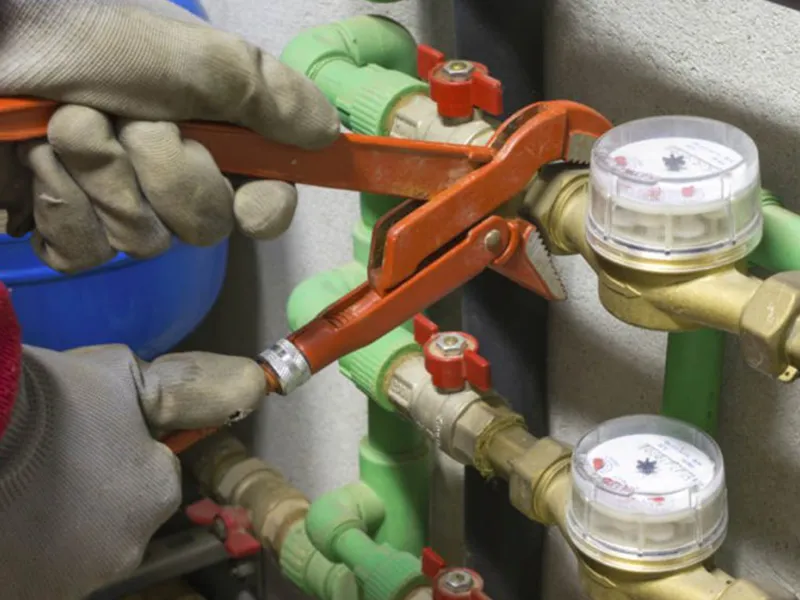
Before starting to install the multi jet water meter, you need to turn off the water supply. Utilice herramientas como destornilladores y llaves para desatornillar y quitar los tornillos que conectan el medidor de agua antiguo a la tubería de agua. Seleccione un medidor de agua del mismo diámetro según el diámetro de la tubería de agua.
Instale bujes reductores en ambos extremos del medidor de agua para asegurarse de que coincidan con el medidor de agua y la tubería.
Instale el medidor de agua en la boquilla del medidor de agua (acoplamiento del medidor de agua) a través del buje reductor, asegurándose de que la dirección de la flecha sea consistente con la dirección del flujo de agua.
Utilice cinta PTFE en todas las conexiones roscadas para mejorar el sellado.
Instale una válvula de control en un extremo del medidor de agua para facilitar la extracción y el mantenimiento del medidor de agua.
Cuando el medidor de agua original deja de funcionar correctamente, se daña y no funciona, cuando vence el período de uso establecido por el gobierno, debemos reemplazarlo. Además, los medidores de agua también se reemplazarán de manera colectiva durante la renovación del área.
The rules for replacing water meters vary from country to country, for example, in Germany, water meters must be replaced every 6 years. In Spain, water meters must be replaced after 12 years unless they are verified to be accurate.
Las anomalías del medidor de agua se pueden monitorear a través de datos de la compañía de agua y evaluar en función de la diferencia entre el suministro de agua real y los datos de lectura del medidor.
Hay dos tipos de medidores de flujo de agua de chorro múltiple, que se pueden utilizar para medir el flujo de agua fría y agua caliente.
En la vida diaria, los medidores de caudal de agua de chorro múltiple son adecuados para entornos que utilizan agua, como hogares, servicios residenciales, comercio, agricultura y jardinería.
En los procesos de producción industrial, los medidores de caudal de agua de chorro múltiple también se utilizan habitualmente en entornos con grandes cantidades de agua, especialmente en fábricas de papel.
Medidores multi-chorro de esfera seca
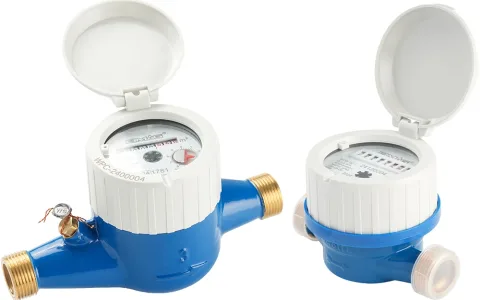
Medidores multi-chorro de esfera seca are also called Dry Type Multi-Jet Meters. There is no liquid in the Multi-Jet Meters that is in direct contact with the measuring element, improving its durability and reducing maintenance requirements. Compared with wet water meters, it can prevent fogging, is easy to read, and is more advanced.
Medidores multichorro con salida de pulso
Medidores multichorro con salida de pulso will generate a pulse signal when a certain volume of water flows through. This pulse signal can be read and processed by electronic devices to accurately measure and monitor water flow.
Depending on the material
Multi jet water flow meters can also be divided into plastic multi jet water flow meters, brass multi jet water flow meters, stainless steel multi jet water flow meters, cast iron multi jet water flow meters, etc.
According to temperature
It can be divided into: cold water meter and hot water meter.
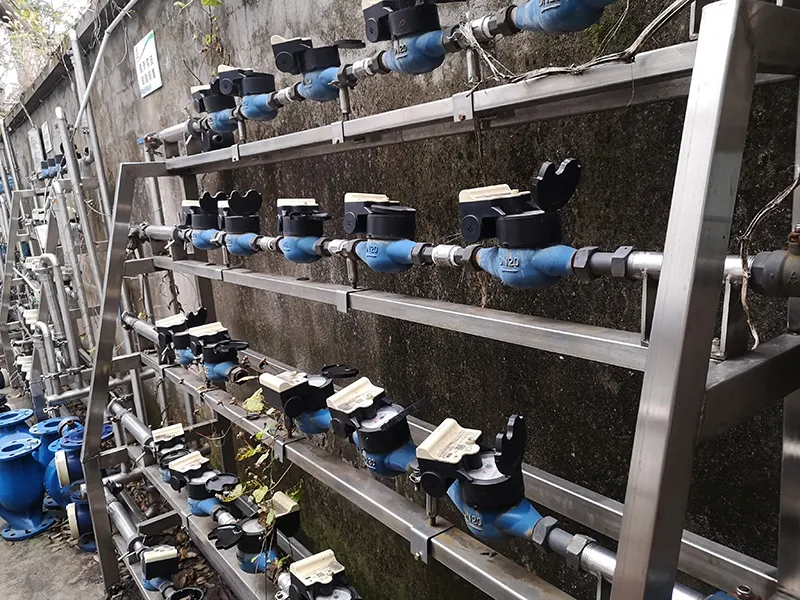
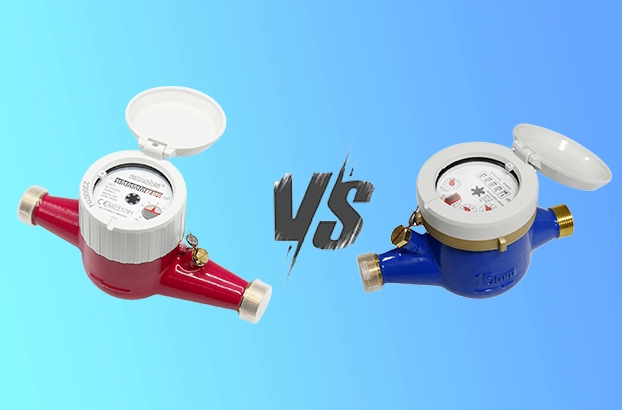
En cuanto al color del revestimiento, el medidor de agua fría es azul, el medidor de agua caliente es rojo y el rango de temperatura es diferente. El medidor de agua fría no se puede utilizar en el sistema de agua caliente. El medidor de agua caliente se puede utilizar en el sistema de agua fría.
Medidor de agua fría: 30℃ (86℉), 50℃ (122℉),
Medidor de agua caliente: hasta 90 ℃ (194 ℉)
Medidor de agua de EE. UU.: 105 ℉ (40 ℃), 160 ℉ (71 ℃)
Huella mundial y excelencia en los proyectos
Más de 80 países de todo el mundo confían en nosotros
Con más de 20 años de experiencia en fabricación, BMAG Meter ofrece soluciones de medición de agua de alta precisión en los 7 continentes.
Desde las redes municipales de abastecimiento en Europa hasta los proyectos de riego a gran escala en América y África, nuestros productos están diseñados para cumplir diversas normas regionales y condiciones medioambientales.
Consulta rápida
Si desea saber más sobre contadores de agua o busca soluciones para contadores de agua, póngase en contacto con nosotros para obtener servicios profesionales.
Disponible 24 horas al día, 7 días a la semana, por correo electrónico o teléfono, para ayudarle a adquirir nuestros productos de contadores de agua, soluciones, problemas de uso o proporcionarle asistencia técnica.