Bangku Ujian Kalibrasi Meter Air
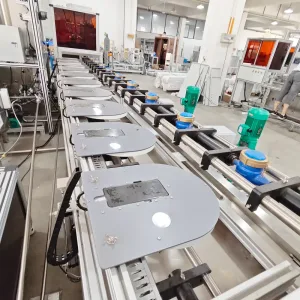
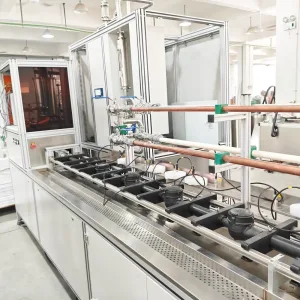
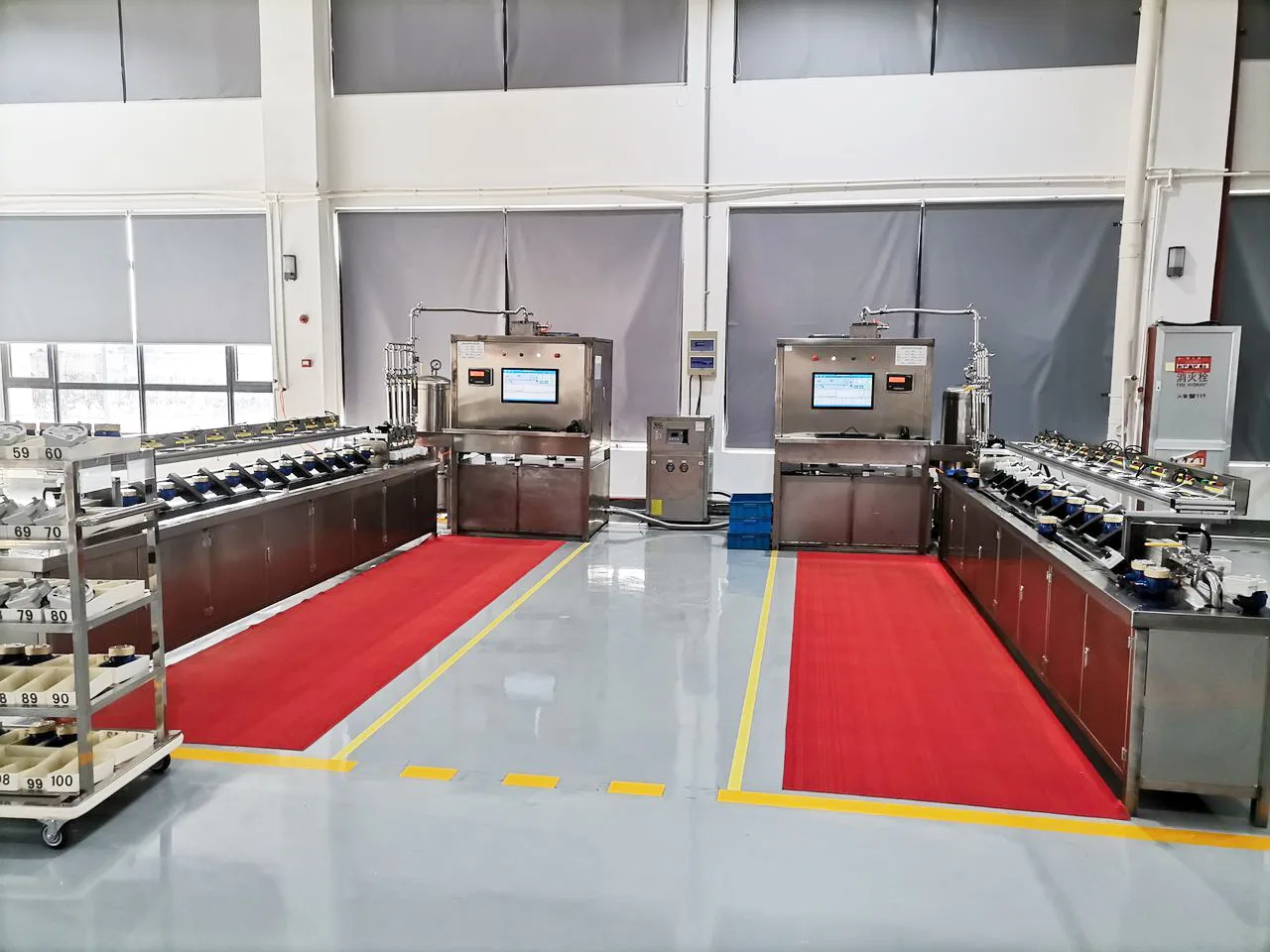
Single-Row Test Benches: This bench, with its modular design, simultaneously tests 10 DN15 water meters in one cycle. Each meter’s achievable accuracy class (R200/R160/R80) is automatically classified within a single test run, eliminating manual grading.

Water Meter Test Benches Specification
1 Applicable Meter Sizes: DN15–DN25 water meters
2 Flow Rate Range: 0.001–8 m³/h
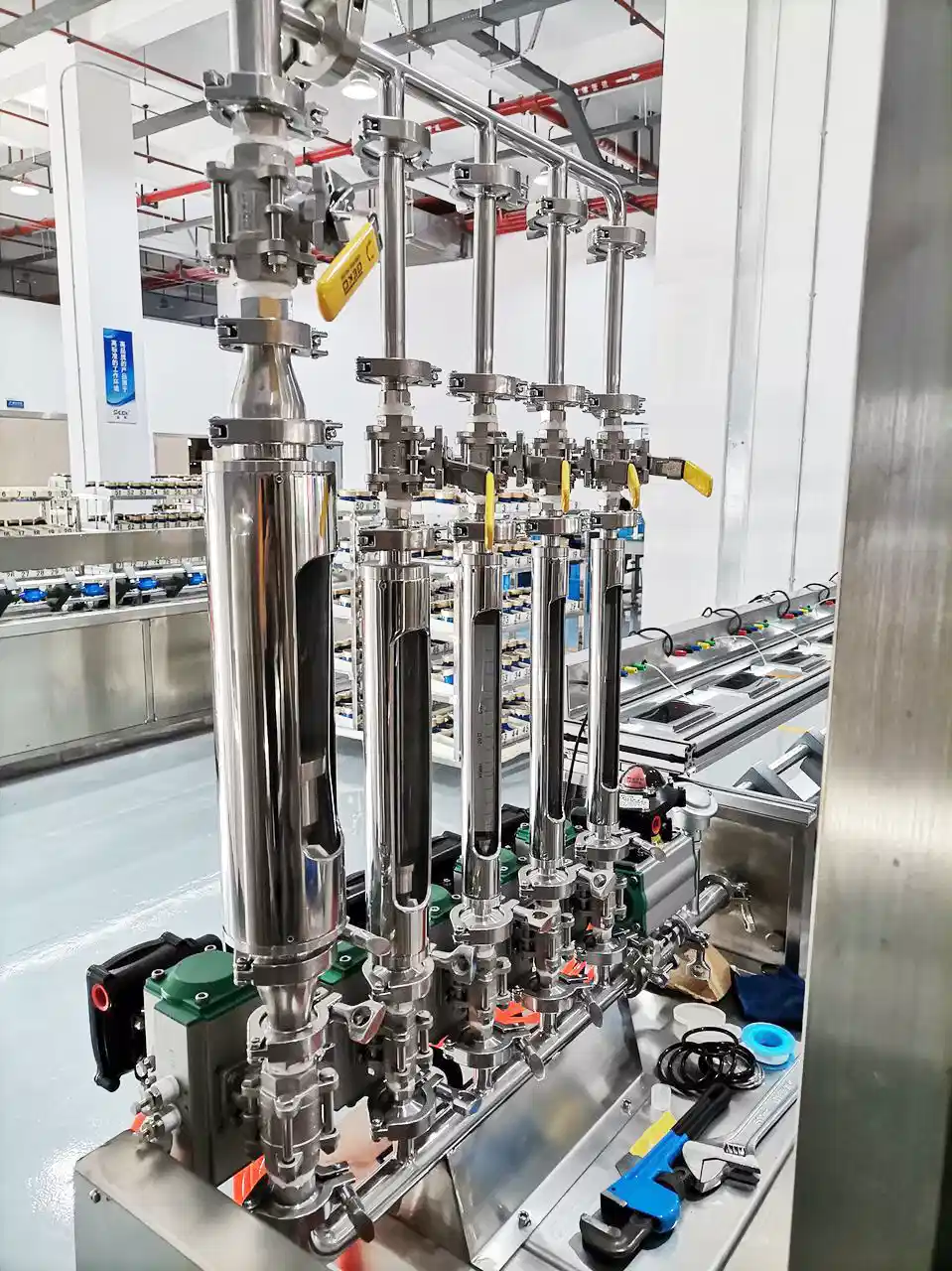
3 Calibration Methods: Static gravimetric method / Dynamic volumetric method (piston prover)
4 Expanded Uncertainty of System: Ur = 0.2% (k = 2)
5 Meter Length Requirements:
- DN15: 165 mm
- DN20: 195 mm
- DN25: 225 mm, 265 mm
6 Weighing Range: 2–120 kg
7 Meter Signal Types: Pulse signal, non-signal
8 Calibration Methods:
- Static gravimetric method
- Dynamic volumetric method (piston prover)
Meter Specifications and Quantity:
DN15: 10 units
DN20: 8 units
DN25: 6 units

Standard Equipment Configuration:
The water meter calibration test benches comply with OIML R 76 requirements and support in-process weight loading for real-time calibration during operation.
For water meter verification, the Q3 test bench employs a proprietary dynamic imaging system that integrates high-speed photography (≥120 fps) with trailing pointer tracking technology. Q2 and Q1 meters utilize a hybrid optical-inductive sensing method for precision signal acquisition. The system operates with fully automated focusing and supports parallel testing of up to 10 units.
Specialized meters requiring manual intervention can be processed via software-controlled start-stop commands, with automated error calculations performed without disrupting standard workflows. Water Meter Calibration Test Benches dynamic image processor simultaneously captures both mechanical and sensitive pointers, reducing water consumption at low-flow thresholds (≤0.001 m³/h) and enhancing verification efficiency by 40% compared to conventional methods.
All sampled images are archived as raw image files (TIFF/PNG formats) on the central computer, ensuring full traceability for audit purposes.