1. Strategic Context and the Impetus for Change
The transition from legacy mechanical metering to solid-state ultrasonic systems is not a simple equipment upgrade; it is a critical strategic pivot required to ensure the fiscal health and operational sustainability of modern water utilities. Globally, utilities are confronting a “bottleneck” in evaluating the true economic value of their water assets. For decades, the reliance on traditional mechanical instruments has led to a systemic loss of “billing authenticity,” undermining the professional image and financial credibility of water providers.
In an era of intensifying water stress, the status quo is characterized by historically low water prices that mask waste and a lack of high-precision measurement. This lack of granular data prevents utilities from capturing the full value of the resource they manage. As the following analysis demonstrates, solid-state ultrasonic technology provides the only viable path forward—replacing unreliable mechanical estimates with definitive, digital data to ensure long-term resilience and revenue security.
2. Technical Paradigm Shift: Mechanical vs. Solid-State Electronic Metering

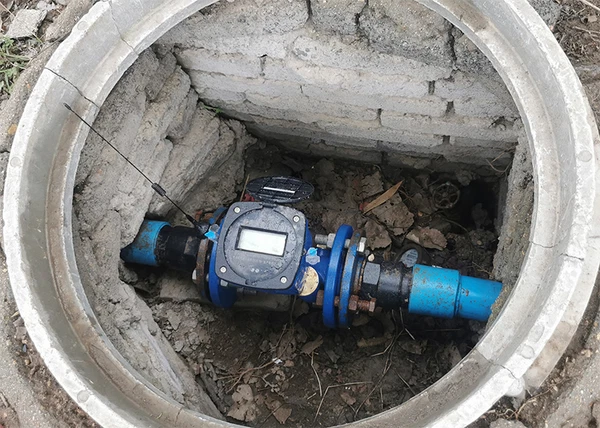
The engineering difference between these two technologies represents a move from kinetic energy measurement to digital signal processing. Mechanical meters utilize moving parts—impellers, gears, or pistons—that begin to fail when they are installed due to physical friction and wear. Solid-state ultrasonic water meters utilize transit-time differential measurement, employing sound waves to calculate velocity with zero internal movement. This elimination of mechanical wear is a strategic imperative for extending asset longevity and maintaining billing integrity.
Comparative Analysis: Electronic vs. Mechanical Metering
| Criteria | Electronic (Solid-State Ultrasonic) | Mechanical (Traditional) |
| Measurement Principle | Ultrasonic sensors (Transit-time difference) | Gear, turbine, or impeller rotation |
| Failure Rates | Low (Static design; 15-year service life) | High (Moving parts susceptible to wear) |
| Wear and Tear | Zero internal friction | Significant gear and bearing friction |
| Resistance to Particulates | Immune to sand, scale, and pipe corrosion | Susceptible to clogging, erosion, and overspin |
| Maintenance | Zero maintenance; internal self-diagnostics | Regular cleaning, testing, and replacement |
| Starting Flow Sensitivity | Ultra-high (~0.05 L/h – 1 L/h) | Low (~5 L/h or higher) |
| Pressure Loss (@ Max Flow) | Low (approx. 4 psi) | High (>18 psi) |
Fiscal Impact of Engineering Superiority
The technical advantages translate directly into fiscal gains. The lower pressure loss of the MACH 10 (4 psi) compared to mechanical compound meters (>18 psi) significantly reduces pump energy requirements, providing a major win for operational expenditure (OPEX). Furthermore, while mechanical meters suffer from “Measurement Drift”—with research from the International Water Association (IWA) and Zhongpei showing that 25% of mechanical meters fall outside acceptable error ranges within five years due to bearing wear—ultrasonic systems remain stable. A 2023 AWWA study confirms that ultrasonic water meters retain a remarkable 98.7% accuracy after five years of continuous operation, effectively eliminating the 1% to 3% annual accuracy degradation typical of traditional systems.
3. Optimizing Revenue: The “Authenticity” and “Accuracy” Framework
Capturing Non-Revenue Water (NRW) is the most immediate lever for improving a utility’s bottom line. Achieving this requires a transition to “Class C” precision to address the phenomenon of “Unfelt Flow”.
The “Float Valve Effect” and Sensitivity Advantage
Traditional mechanical meters (Class B) are fundamentally incapable of measuring micro-flows. This is most evident in the “Float Valve Effect,” where the slow filling of tanks or towers creates a measurement error of approximately -20% for mechanical registers.
- Sensitivity Benchmark: Ultrasonic sensors, such as those in Axioma systems, can detect flows as low as 0.05 L/h, making them 50 times more sensitive than traditional mechanical registers which often fail to register flows below 5 L/h.
- Billing Authenticity: Transitioning to Class C electronic meters improves average revenue rates by 2% to 3% by capturing flows from leaking toilets and dripping faucets that mechanical meters ignore.
Proven Economic Returns
Data from municipal rollouts and industrial case studies provide a clear ROI roadmap:
- Industrial Case Study: At a Trademark Printing Plant, transitioning to high-precision electronic metering yielded a full ROI within 2.5 years, generating 3,500 USD in additional annual economic benefit.
- Municipal Case Study: A municipal AMI rollout in the Southwestern U.S. recovered $2.8 million in operational costs by identifying 3,400 micro-leaks within the first 90 days.
- Beijing Analysis: The move from Class B to Class C accuracy reduced measurement loss rates by an average of 4.32% across diverse user profiles.
4. Asset Management: Sizing Strategies and Lifecycle Economics
Strategic asset management requires “Optimal Sizing” to maximize reliability and minimize depreciation. Traditional “one-size-fits-all” procurement leads to over-sized meters that lose revenue at low flows or under-sized meters that fail under load.
Strategic Sizing Guidelines
Based on user pattern analysis, utilities must map meter types to specific flow demands:
- Constant Industrial Flows: For industrial users with constant demand between 1,200 and 13,000 m^3/month, “Woltmann” or ultrasonic types are essential to ensure accuracy.
- Over-Sized Scenarios: When evaluating over-sized connections, asset managers must analyze the trade-off between Basic Fee Revenue and Water Fee Revenue. Ultrasonic water meters allow utilities to maintain larger diameters for peak demand while capturing the micro-flows that previously went unbilled.
- Compound Meter Replacement: In fire service lines, mechanical compound meters suffer from “crossover” accuracy dips, falling to 85% accuracy when valves transition. Ultrasonic alternatives maintain linear accuracy across the entire flow range.
10-Year Total Cost of Ownership (TCO)
Despite a higher initial CAPEX, the lifecycle economics of solid-state technology are superior. The MACH 10, for example, includes a 10-year accuracy warranty—a strategic hedge against asset depreciation.
8″ Fire Service Meter TCO Comparison:
- Mechanical Compound (e.g., HP PROTECTUS III): $41,000 (Includes high installation weight, annual testing mandated by AWWA, and parts/maintenance).
- Ultrasonic Solid-State (e.g., MACH 10): $13,500 (Reduced weight simplifies installation; zero moving parts eliminates maintenance).
- Strategic Outcome: Transitioning to ultrasonic reduces the annualized cost per node by 67%, from $4,100 to $1,350.
5. Synergy with AMI and Intelligent Water Management
Solid-state meters serve as the high-resolution “eyes and ears” of the utility. When integrated into Advanced Metering Infrastructure (AMI), they transform the utility from a reactive entity into a proactive, data-driven organization.
The “4Ds” Strategy: Deep Data Driving Decisions
To maximize the “4Ds” promise, this proposal recommends building consumption profiles inside the meter (Option 2) rather than transmitting raw data to the head-end. This strategic choice offers two critical advantages:
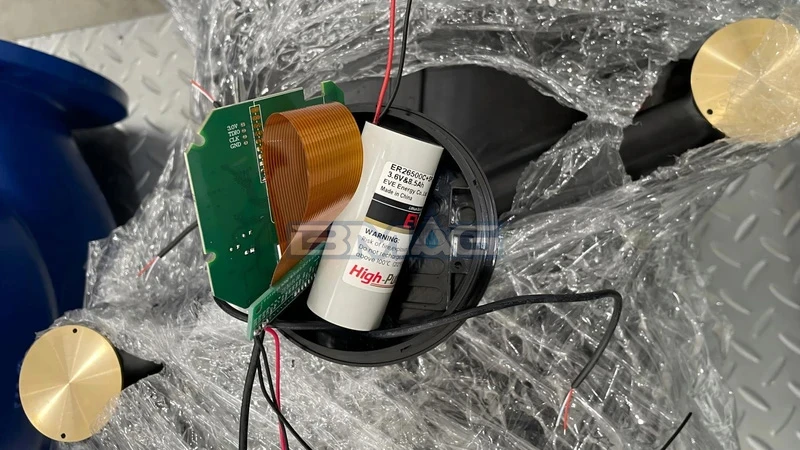
- Battery Optimization: By calculating profiles locally from measurements taken every few seconds, the meter minimizes power-hungry data transmissions, ensuring a 15-year battery life.
- Superior Accuracy: Meter-side profile calculation provides a higher-fidelity behavioral map of customer usage compared to profiles built from hourly snapshots.
This high-resolution data enables precise water balancing, real-time alerts for bursts or reverse flows, and behavioral modification through transparent customer usage profiles—securing the network against theft and tampering.
6. Conclusion: The Business Case for Immediate Transformation
The economic and operational evidence for transitioning to Ultrasonic Metering is definitive. While initial procurement costs are higher than legacy mechanical options, the long-term fiscal benefits are undeniable.
- Anchor Metric: Ultrasonic water meters retain 98.7% of their initial accuracy after five years, providing a stable revenue foundation that mechanical systems cannot match.
- Operational Savings: Utilities can expect a 25% to 40% lower TCO over a 10-year period due to the elimination of maintenance, testing, and premature replacement.
- Revenue Recovery: A baseline 2% to 3% increase in billable volume is achieved immediately by capturing “unfelt” flows and eliminating “crossover” accuracy drops.
Strategic Mandate
For asset managers and C-suite executives, the mandate is clear: The higher initial capital expenditure is offset by a 3-to-5-year break-even period and a 15-year service life. Transitioning to solid-state metering is the foundational step in future-proofing utility infrastructure against global water stress and ensuring a resilient, profitable, and fair water management system.