What Exactly is a Volumetric Water Meter?
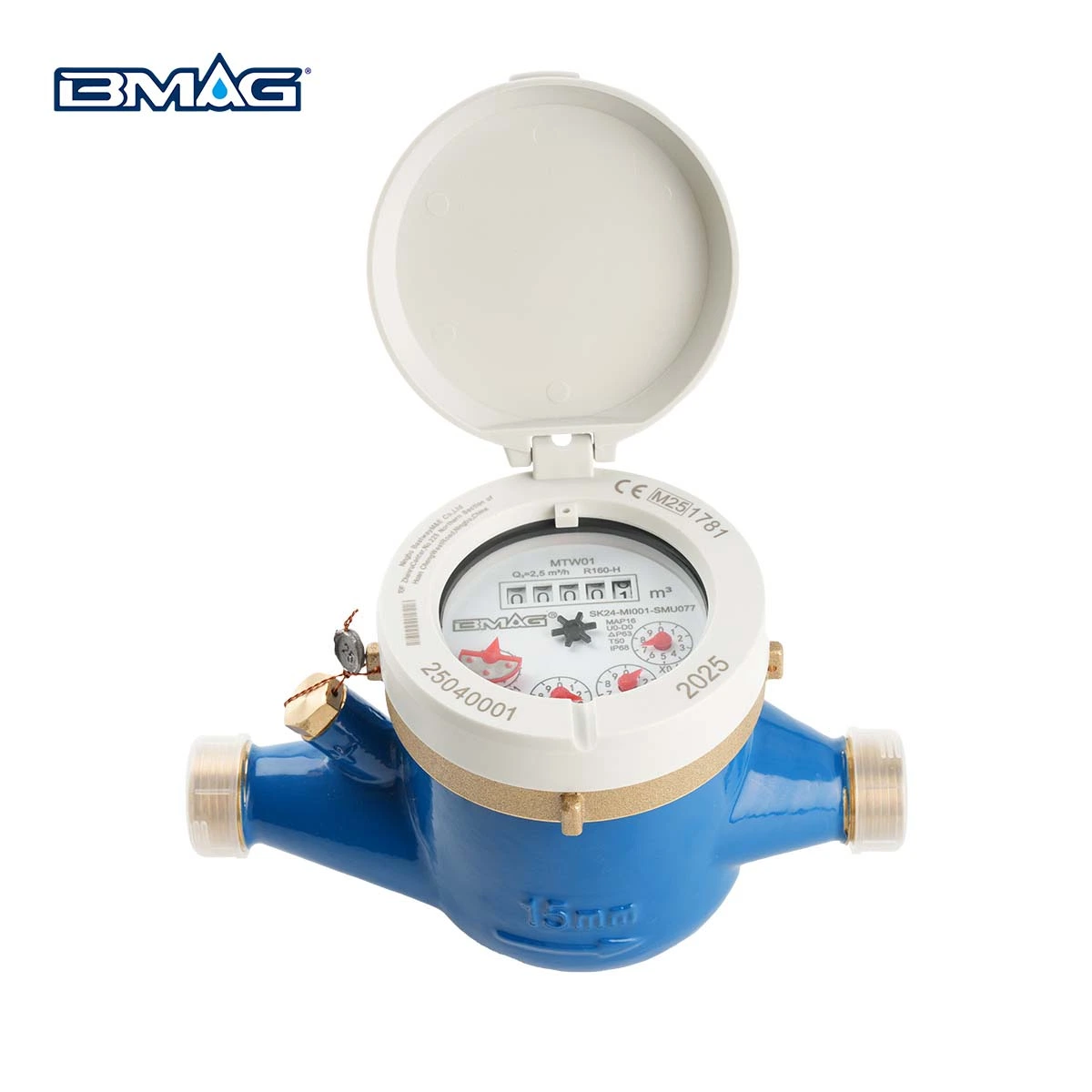
Have you ever paused to think about how your utility company manages to bill you accurately for every liter or gallon of water you consume? One of the most accurate tools in this field is the volumetric water meter (also known as piston water meter). Often, these are tucked away in your basement or utility cabinet. Simply put, a volumetric water meter measures the actual volume of water passing through it by trapping and counting discrete, known quantities of water. This is distinct from other meter types that estimate flow based on the water’s speed. Think of it less like a speedometer and more like a precise measuring cup that fills and empties, recording the count as it goes. If you’re looking for high accuracy, especially at low flow rates, the volumetric design is, without a doubt, a top contender.
Diving into the Mechanism: The Rotating Piston Water Meter Principle

The core of the volumetric meter’s brilliant operation lies in a concept called positive displacement (PD). Among PD meters, the most common type—and the one we’re focusing on—uses a nutating disc or, more often in modern, high-precision designs, a rotating piston. Imagine a small, perfectly sized chamber. Inside this chamber sits a piston that is constrained to rotate in a specific, circular path. When water enters the meter, it pushes the piston, causing it to nutate (a wobbling motion) or rotate. This movement is the key to the measurement. The incoming water must fill one side of the piston’s path before pushing it around and displacing the water already measured on the other side.
Understanding the Piston’s Role in Measurement
Why is this little piston so important? Because its rotational movement is directly proportional to the volume of water that has passed. Each complete rotation of the piston corresponds to a precisely known, pre-calibrated volume of water. As the piston spins, a gear train or, more commonly, a magnetic coupling, translates this mechanical motion to the sealed register on the meter’s face. The beauty of this design is its direct measurement. The faster the water flows, the quicker the piston rotates, and the faster the reading increases. It’s a beautifully simple and reliable physical principle at work.
Why the Volumetric Design Ensures High Accuracy
The inherent structure of the rotating piston mechanism virtually eliminates measurement errors at very low flows. In velocity-type water meters, a tiny trickle of water might not be enough to turn a turbine or register a reading. However, in a volumetric meter, any water that enters the measuring chamber must necessarily push the piston and be counted. Even a slight drip, over time, will be registered. Volumetric water meters have high measurement accuracy and record water consumption very precisely. This is what makes volumetric meters the standard choice for residential and small commercial applications.
Volumetric Water Meters vs. Other Water Meters
When you look at the landscape of water measurement, volumetric meters stand out because they fall into the Positive Displacement (PD) category. This category is defined by the mechanism’s need to physically displace a known quantity of fluid to register a measurement. Other common types operate on entirely different principles. Understanding the distinction is crucial when deciding which meter is right for a specific application.
Comparing Volumetric (PD) to Velocity (Turbine) Meters

The main alternative you’ll encounter is the velocity meter, the most common being the turbine meter. Turbine meters have an internal propeller or rotor that spins when water flows past it. They measure the speed of the water flow, and that speed is then converted into a volume measurement. Here’s the catch: for a turbine to spin accurately, the water needs a certain minimum flow rate. Volumetric water meters, as we’ve established, count the actual volume, making them far more accurate for the small, stop-and-go flows typical of a single-family home. While turbine meters are fantastic for high-volume, continuous industrial flows, they simply can’t match the low-flow sensitivity of a quality volumetric meter.
When to Choose Volumetric: The Low-Flow Champion
You should almost always opt for a volumetric meter when your priority is pinpoint accuracy across a wide range of flow rates, particularly at the lower end. This makes them the definitive choice for sub-metering within apartment buildings, individual residential homes, and smaller commercial properties. If you have tenants who are conscious of their water use or a service area with frequent, short periods of water demand (like flushing a toilet or running a tap for a few seconds), the volumetric water meter ensures that every drop used is accounted for, minimizing what utilities call “unaccounted-for water” (UAW).
The Anatomy of Accuracy: Key Components Explained
The success of the volumetric meter is a result of several key components working in perfect synchronization. Understanding these parts demystifies the measurement process and highlights the meter’s robust design.

The Measuring Chamber and Piston Assembly
The measuring chamber is the heart of the meter, a precision-machined space that defines the fixed volume of water counted with each cycle. The piston assembly, typically made from a durable, low-friction material, is designed to fit this chamber with extremely tight tolerances. This tight fit is critical, as it minimizes the amount of water that can slip by (leakage) without being measured. The quality of these parts directly determines the meter’s sustained accuracy over its service life.
The Magnetic Drive and Sealed Register
In modern volumetric meters, the mechanical motion of the piston is transferred to the counter via a magnetic drive. This is a major improvement over older, mechanically linked designs. The magnetic drive allows the register (the part with the dials and numbers you read) to be completely sealed off from the water passing through the meter. Why is this important? It prevents corrosion, fogging, and contamination of the register’s delicate gears, significantly increasing the meter’s longevity and ensuring the readability of the measurement—a huge win for both the user and the utility.
Installation and Maintenance: Keeping Your Meter Running Smoothly
Even the most accurate instrument needs proper handling. Luckily, volumetric water meters are relatively straightforward to install and maintain, contributing to their low total cost of ownership.

Best Practices for Initial Installation
The most crucial step in installing a volumetric meter is ensuring it is placed horizontally (level) or vertically in the pipe. While some modern designs are more tolerant, a horizontal or vertical installation prevents uneven wear on the piston and ensures optimal function. Furthermore, the meter should be installed with its flow direction arrow matching the actual water flow. Using appropriate gaskets and ensuring a watertight, stress-free connection will prevent leaks and premature failure. Utilities should also ensure the meter size is correctly matched to the maximum expected flow, as an oversized meter can struggle to maintain accuracy at its lowest operating range.
Troubleshooting Common Issues and Longevity Tips
Volumetric meters are known for their resilience, but they aren’t immune to issues. Debris and sediment are the primary enemies, as they can scratch the piston or measuring chamber walls, reducing accuracy. Regular maintenance often involves installing a strainer or screen upstream of the meter, especially in areas with older pipe networks. A key sign of a failing volumetric water meter is a reading that is consistently lower than expected, indicating water is slipping past the piston. The best tip for longevity? Use a reputable, high-quality meter that meets or exceeds industry standards like those from the American Water Works Association (AWWA).
Horizontal Volumetric Meter VS Vertical Volumetric Meter
Although Volumetric Meters are theoretically one of the most flexible meter types in terms of installation angle, real-world application often necessitates specialized designs or strict installation guidelines for horizontal and vertical piping to ensure optimal accuracy and longevity.
Design and Installation Differences
The primary distinction between vertical and horizontal volumetric water meters lies in the internal design optimized for the pipe’s orientation and, critically, the requirements for stable, air-free metering.
| ميزة | Horizontal Volumetric Meter | Vertical Volumetric Meter |
| Optimized Design | Optimized for horizontal flow runs. The measuring component operates in a horizontal plane, minimizing gravitational effects on movement. | Optimized for vertical flow runs (typically bottom-up). The internal chamber and disc/piston are braced to withstand axial flow forces. |
| Flow Stability | Requires stable horizontal flow. Risk of sediment collection at the bottom. | Excellent at evacuating air bubbles when flow is bottom-up, ensuring high precision in vertical risers. |
| External Readout | معياري The register (counter) is typically mounted on top and parallel to the pipe, making it easily accessible. | Non-Standard: The register may be mounted perpendicular to the flow or require specialized orientation, sometimes making access more challenging. |
Difference in Smart Module Integration (Remote Reading Capability)
This is a critical distinction, especially for modern metering systems. The physical design of the meter significantly impacts the feasibility and convenience of adding remote reading capabilities.
| Meter Type | Remote Reading Module Integration | Rationale and BMAG’s Advantage |
| Vertical Volumetric Meter | Limited or No Provision for Module Integration. | The vertical design often places the register in a constrained position or uses a non-standard drive mechanism that does not easily accommodate the addition of a pulse emitter, M-BUS, or NB-IoT module. This makes upgrading to a smart meter difficult or impossible after initial installation. |
| BMAG’s New Horizontal Meter | Designed for Easy Integration (Modular Design). | BMAG’s new horizontal volumetric meters feature a dry-type register specifically designed with a dedicated port or interface. This modular approach allows for the post-installation addition of various remote reading modules (e.g., M-BUS, LoRa, NB-IoT). This provides clients with future-proofing and simplifies inventory management. |
The Unbeatable Benefits of Choosing Volumetric Meters
Why do water utilities worldwide continue to rely on this technology despite the emergence of newer ultrasonic and electromagnetic alternatives? The benefits are compelling and centered on reliability and performance.

Superior Performance at Low and Intermittent Flows
This is the meter’s superpower. A tiny leak in a toilet or a constantly dripping faucet can waste thousands of gallons annually. A less sensitive meter might miss this usage entirely, leading to revenue loss for the utility and the perpetuation of the leak. Because the volumetric meter must count every defined volume, it captures these low-flow events with exceptional fidelity.
Durability and Long-Term Cost Savings
Volumetric meters, particularly those with modern non-corrosive, sealed registers, offer remarkable durability. Their mechanical simplicity, when compared to electronically complex meters, translates to a lower failure rate and a longer service life.
The Advantages And Disadvantages Of Volumetric Water Meters
| General Advantages | General Disadvantages |
| High Sensitivity and Accuracy: Excellent performance across the entire flow range, particularly superior accuracy at low flow rates (Qmin). | High Sensitivity to Water Quality: Easily affected by suspended solids, rust, or grit, which can lead to jamming, excessive wear, and loss of accuracy. |
| Good Longevity: When used with clean water, the accuracy decay is slow, leading to a long service life. | Higher Pressure Loss (Head Loss): Due to the tortuous path the water must take around the piston/disc, the pressure drop is typically greater than that of comparable multi-jet or turbine meters. |
| Effective Anti-Reverse Flow: The piston/disc mechanism naturally offers resistance to backflow (though an external check valve is still recommended). | Size Limitations: Volumetric meters are typically limited to small to medium pipe sizes (e.g., DN15 to DN40). Large diameters require other technologies (like turbine or ultrasonic). |
The Future of Water Management and Volumetric Meters
You might think that a mechanical device like a volumetric water meter is destined to be replaced by purely electronic alternatives. Think again. The technology is adapting and thriving in the modern smart-grid environment.
Integration with Smart Metering (AMR/AMI) Systems
Today’s volumetric meters aren’t just mechanical counters; they are often equipped with a pulse output or, more commonly, a wired or wireless encoder register. This register translates the mechanical rotation into a digital signal that can be transmitted to a utility’s reading system. This allows the classic, highly accurate mechanical counting mechanism to integrate seamlessly with modern Automatic Meter Reading (AMR) or Advanced Metering Infrastructure (AMI) systems. This fusion of reliable mechanical measurement with digital data transmission gives utilities the best of both worlds: high accuracy and real-time remote monitoring.
Conclusion: Making Every Drop Count
The volumetric water meter is a testament to the fact that sometimes the best solutions are built on reliable, simple mechanical principles. By physically trapping and counting a precise volume of water, it offers an unparalleled level of accuracy, especially at the crucial low-flow end where leaks and residential consumption often occur. From your morning shower to the water used to brew your coffee, this clever device ensures that water is measured accurately, promoting fairness in billing and encouraging conservation. Next time you see a meter, give a nod to the humble, rotating piston—it’s the reason why we can truly say we’re making every drop count.