Introduction: The Key Role of Water Meter Surface Treatment in Water Meter Design
Water meters, as critical devices for measuring water consumption, operate in complex environments and need to withstand water, humidity, temperature, and erosion from corrosive substances. Therefore, their casings and internal components require robust surface protection to prevent corrosion, ensure aesthetic appeal, and extend lifespan. The choice of surface treatment is a multi-objective optimization, requiring a balance between technical performance (such as corrosion resistance), economic feasibility (cost, efficiency), and environmental factors. Due to the mass production of water meters and their challenging yet not extremely harsh operating environments, solutions that offer adequate protection, lower costs, and high production efficiency are typically prioritized over technically superior but more expensive or complex processes. This trade-off is the basis for decision-making.
What are Water Meter Surface Treatment Technologies?
Water meter surface treatment methods include: spray painting (traditional spray painting and electrostatic powder coating) and electroplating.
Water Meter Spray Painting
Water meter spray painting is the most commonly used surface treatment process.
Traditional Water Meter Spray Painting
Traditional water meter spray painting applies liquid paint to the water meter surface using compressed air. This is the simplest water meter protection process to operate. In the past, traditional spray painting was favored for its lower cost compared to electroplating and its suitability for large-scale production.
However, traditional spray painting also has disadvantages.

- The corrosion resistance provided by its coating is limited. In harsh environments, the coating is prone to corrosion, leading to peeling. Furthermore, prolonged exposure to outdoor conditions causes the coating to fade and age due to UV radiation.
- From an environmental and safety perspective, the paints used in spray painting are not environmentally friendly materials. Moreover, in the traditional spray painting process, paint utilization is low, resulting in significant waste and environmental pollution. At the same time, the paints are flammable, posing a considerable fire hazard, thus typically requiring treatment in a dust-free workshop.
Water Meter Electrostatic Powder Coating

Water meter Electrostatic Powder Coating is an upgrade to spray painting technology. In this process, dry powder paint is electrostatically charged and then sprayed onto a grounded workpiece surface. The charged powder particles adhere to the oppositely charged product surface, forming a uniform coating. When the powder accumulates to a certain thickness, the charge buildup intensifies, and the already adsorbed charged powder repels subsequent charged powder, thus forming a uniform coating of self-limiting thickness. Finally, through heat treatment, the powder melts and cures into a smooth, durable protective film layer on the water meter.
Compared to traditional spray painting, electrostatic powder coating offers superior coating quality, stronger adhesion, and more uniform thickness. This improves the water meter’s corrosion resistance and reduces the occurrence of coating peeling. Electrostatic powder coating is also better in terms of environmental protection and safety. It directly uses powder coatings without the need for liquid dilution, has no irritating odors, and provides a healthier and safer working environment for workers. In terms of production efficiency and worker skill requirements, electrostatic powder coating has a shorter curing time and relatively lower technical requirements for workers. These features help improve production efficiency and reduce labor costs.
Water Meter Electroplating Technology
Water meter electroplating is a process that forms a thin metal film on the water meter surface through the principle of electrolysis.
Principle of Water Meter Electroplating
Water meter electroplating also utilizes the principle of attraction between positive and negative charges, but unlike electrostatic powder coating, electroplating is carried out in an electrolyte solution. The water meter serves as the cathode, connected to an anode in the electroplating solution. Through electric current, metal ions from the anode flow freely, seeking the cathode ions on the water meter casing, and deposit on the cathode, forming a thin metal film.

Comparative Analysis of Water Meter Spray Painting and Electroplating
Cost-Effectiveness and Production Efficiency
For factory products involving large-scale production of water meters, cost-effectiveness is the most important decisive factor.
- Water Meter Electrostatic Powder Coating: Lower cost than electroplating, simpler operating process. Electrostatic powder coating is suitable for large-scale water meter production, and its short curing time helps improve production efficiency.
- Water Meter Electroplating: The cost of electroplating equipment and consumables is higher, along with expenses for waste liquid treatment and higher electricity bills. The overall production cost of the electroplating industry is higher than that of powder coating.
Electrostatic powder coating is currently the most cost-effective surface treatment process for water meters. While meeting the basic anti-corrosion requirements of water meters, it allows for rapid, large-scale factory production, satisfying usage requirements while being cost-effective. Electrostatic powder coating is the optimal surface treatment solution for water meter factories.
The corrosion resistance and durability of the surface coating are key to product lifespan.
Corrosion Resistance and Durability
- Electrostatic Powder Coating: Provides very good water meter coating quality and very strong adhesion. Due to the attractive force between positive and negative charges, electrostatic powder coating has better adhesion and stronger corrosion resistance than traditional spray painting.
- General Electroplating: The main purpose of electroplating is to prevent water meter corrosion and improve wear resistance. The formed metal film can provide stronger protection and hardness than powder coating.
The corrosion resistance and adhesion provided by electrostatic powder coating are sufficient for water meters to reach the level required for their application. This reduces the need for more expensive electroplating. The additional corrosion resistance advantage provided by electroplated water meters offers better protection in more severe environmental conditions. This depends on the actual needs of the water meter, weighing cost against performance.
Environmental Impact and Safety
Modern industry places increasing emphasis on environmental impact and worker safety.
- Electrostatic Powder Coating: From an environmental perspective, electrostatic powder coating has significant advantages because it uses powder directly without liquid dilution, thereby reducing harm to the environment and human body. It also solves the “low utilization rate” and “fire hazard” problems associated with traditional liquid paints.
- General Electroplating: Often associated with the generation of waste liquids that require specialized and costly treatment, thereby increasing its environmental footprint.
Environmental regulations and corporate sustainability goals increasingly favor processes that reduce waste and the use of hazardous substances. The inherent environmental advantages of electrostatic powder coating (no liquid waste, higher material utilization rate) give it a significant edge over traditional electroplating processes, making it a more attractive option for large-scale manufacturing.
Material Compatibility and Aesthetic Considerations
The choice of surface treatment process also needs to consider material properties and the final product’s appearance.
- Electrostatic Powder Coating: Mainly used for metal substrates, very suitable for surface treatment of brass and cast iron water meters. It can provide a wide range of color effects; common blue and red water meters can be finished with electrostatic powder coating.
- General Electroplating: Suitable for metals and some non-metallic materials, such as ABS plastic. Can provide a more aesthetically pleasing appearance.
Technical Requirements and Process Complexity
The technical difficulty of the production process and management complexity directly affect production efficiency and cost.
- Electrostatic Powder Coating: Compared to traditional spray painting, it has lower technical requirements for workers, simplifying the training process. Additionally, its short curing time speeds up the overall manufacturing speed of water meters.
- General Electroplating: Involves relatively complex chemical processes, requiring precise control of current density, temperature, and bath composition, necessitating specialized operators and professional equipment.
The technical simplicity and faster curing time of electrostatic powder coating translate into lower costs and higher production efficiency. This makes it a more cost-effective choice than complex electroplating processes for large-scale water meter manufacturing.

Comparison Table of Surface Treatment Technologies
The table below summarizes the key characteristics of different surface treatment technologies in industrial applications to provide an intuitive comparison.
| Fonctionnalité | Traditional Spray Painting | Electrostatic Powder Coating | General Electroplating |
| Coût | Low | Low | High |
| Résistance à la corrosion | Limited | Good | Excellent |
| Environmental Impact | High | Low | High |
| Production Efficiency | High | High | Medium |
| Material Compatibility | Metals, some plastics | Metals, some plastics | Metals, some non-metals |
| Adhesion/Coating Quality | Medium | Excellent | Excellent |
| Worker Skill Requirement | Low | Low | High |
| Curing Time | Long | Short | Medium |
| Aesthetic Range | Good | Good | Limited |
| Fire Hazard | High | Low | Low |
Hazards of Not Treating Water Meter Surfaces
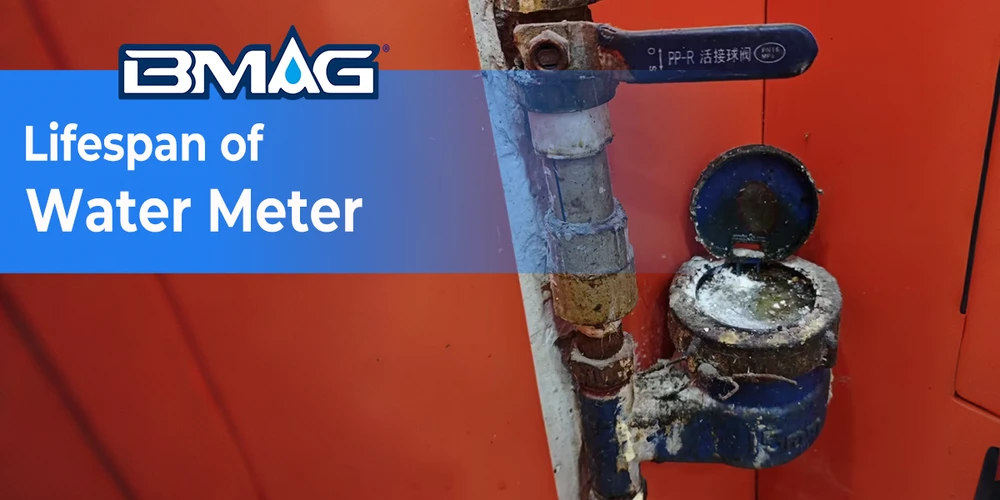
Corrosion and Rusting:
Water Contamination: Deep corrosion can cause particles to detach and enter the water supply system, leading to yellowing of water, excessive iron content, and health impacts.
Reduced Casing Strength: Continuous rusting can thin the water meter casing, reducing its pressure-bearing capacity, making it prone to cracking and leaking when water pressure increases.
Shortened Lifespan:
Untreated water meters are more susceptible to environmental erosion under continuous corrosion and wear, leading to a rapid decline in their physical and mechanical properties, accelerating replacement cycles, and increasing replacement costs and maintenance workload.
Poor Appearance and Maintenance Difficulties:
Affects Appearance: Untreated metal surfaces will discolor, develop rust spots, and even corrode severely, affecting appearance.
Difficult to Clean: Rough, rusted surfaces are difficult to clean.
Potential Safety Hazards:
Severe corrosion reduces casing strength, potentially leading to water meter bursting under water pressure impact, causing leakage accidents and property damage.
For High-Quality Water Meters, Choose BMAG.