What is an AMI Water Meter?
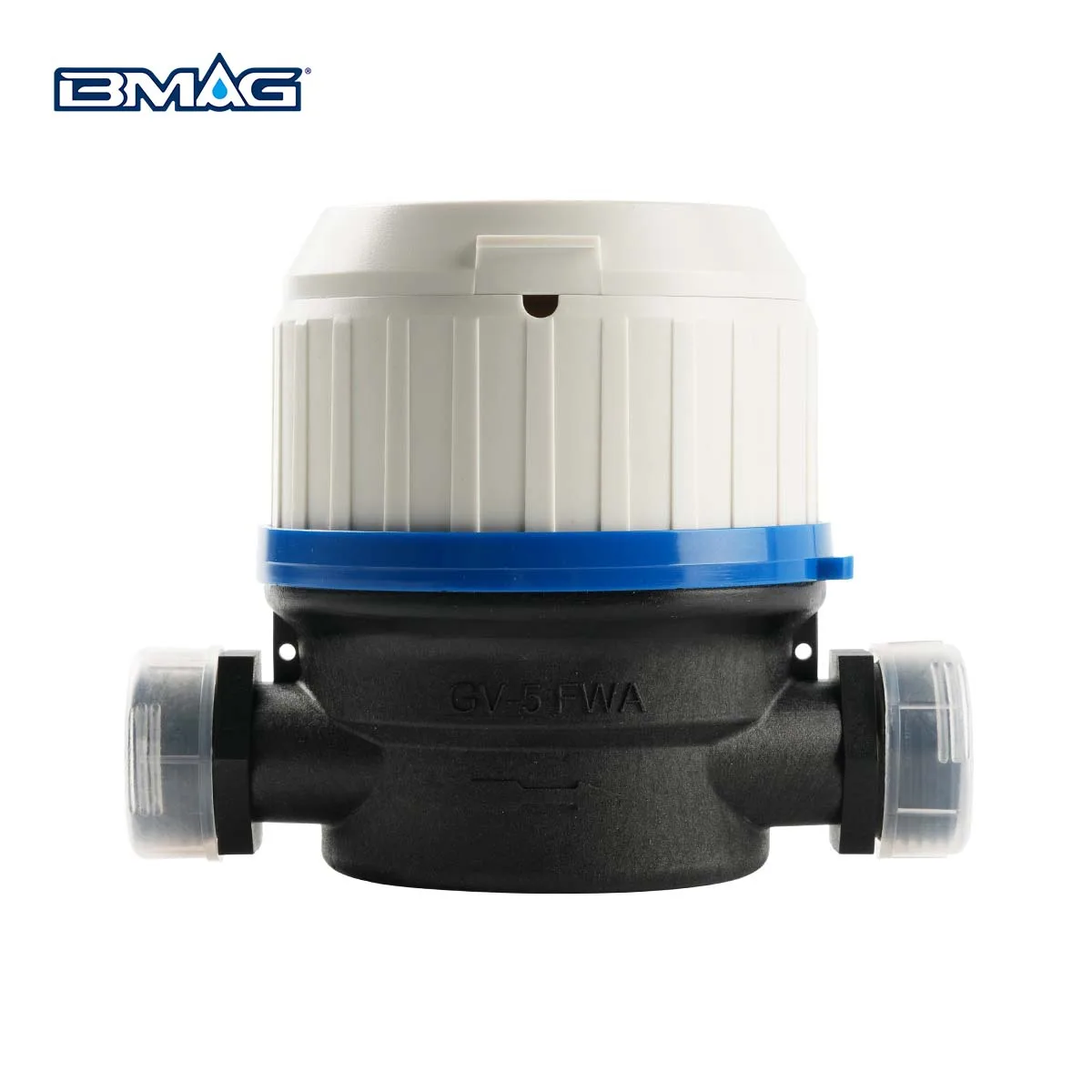
An AMI water meter is an integrated technological system combining smart metering terminals, bidirectional communication networks, and backend data management and analytics systems. Here, AMI stands for Advanced Metering Infrastructure.

Advantages of AMI Water Metering Reading VS Traditional and AMR Water Metering Reading
Compared to traditional manual meter reading or automatic meter reading (AMR) systems, AMI achieves a revolutionary leap:
1. Unidirectional vs. Bidirectional Communication
AMR enables only one-way data transmission from meters to utilities, whereas AMI supports bidirectional communication. This means utilities can not only “read” data but also “write” commands—such as remotely configuring parameters, performing firmware upgrades, executing valve controls (e.g., remote shut-offs for leaks or delinquent payments), and even sending notifications to user terminals (e.g., billing software).
2. Periodic Readings vs. High-Frequency Data Streams
Traditional methods may capture a single cumulative water usage reading monthly or quarterly. AMI systems, however, collect and transmit data at high frequencies—such as hourly, every 15 minutes, or even more frequently—generating a continuous stream of water usage data.
Based on large-scale analysis of user water consumption behavior, utilities can clearly identify typical daily usage patterns:
- Morning peak (7:00–9:00): when people wake up, wash, and prepare for school or work.
- Evening peak (17:00–21:00): when households cook, shower, and clean.
- Low-usage period (22:00–06:00): when most users are asleep.
- Average daytime usage: typically 1–2 water-use events per hour.
These insights allow AMI systems to move from “blind high-frequency reporting” to intelligent, demand-driven data collection, improving both operational value and system efficiency.
3. Isolated Data vs. Integrated Systems
AMI is not a standalone system. It is designed to deeply integrate with other core business systems of the utility company—such as Customer Information Systems (CIS) and Billing Systems—to form a data-driven smart water operations center.

Therefore, a typical AMI water meter system comprises the following key layers:
Smart Metering Terminal: The smart water meters themselves.
Communication Network: Wired or wireless networks connecting smart meters to data concentrators/gateways, and linking concentrators to backend systems.
Data Acquisition and Concentration: Includes devices like data concentrators (Gateways), collectors, and routers responsible for aggregating data from smart meters.
Data Management and Application: Relying on software integration—specifically the Head-End System (HES) and Meter Data Management System (MDMS)—it receives, validates, stores, processes, and analyzes massive metering data, transforming it into actionable business insights.
Hardware Infrastructure Requirements for AMI Water Systems
1. Smart Water Meters
Smart water meters serve as the data source points for AMI systems. Their hardware requirements include:
Metering Sensors: Typically employ ultrasonic or electromagnetic measurement principles due to their high accuracy (±1-2%), wide measurement range, absence of moving mechanical parts, and excellent long-term stability. Retrofitting mechanical water meters with communication modules is a transitional solution but offers limited functionality.
Processing and Storage Unit: Incorporates a microcontroller (MCU) responsible for driving sensors, processing raw data, executing billing algorithms, and storing historical readings (even during communication interruptions).
Communication Module: This is the critical component connecting the meter to the network. The specific module depends on the communication technology described below.
Power System: Since water meters are typically installed in basements, wells, or outdoors, access to mains power is often unavailable. Consequently, long-life lithium batteries have become the mainstream power solution, requiring a lifespan of 6-15 years.
Housing and Structure: Must meet high protection ratings like IP68 to withstand harsh environments such as humidity, immersion, and dust. Materials should be corrosion-resistant and incorporate mechanical impact resistance and tamper-proof design.


2.Communication Network Technologies
The communication network serves as the bridge connecting water meters to backend systems. Common AMI communication methods for water utilities include:
RF Mesh (Self-Organizing Wireless)
RF Mesh offers carrier-independent flexibility, suitable for large areas like industrial parks, suburban zones, or wireless signal dead zones. Requires self-built base stations (concentrators), resulting in higher initial network deployment costs.
LPWAN (Low-Power Wide-Area Network)

NB-IoT is one of the most mainstream AMI water meter network technologies, dominating urban deployments. It leverages carrier LTE networks and requires subscribing to communication plans. Featuring ultra-low power consumption, deep coverage (strong penetration capability), massive connectivity (single cell supports numerous terminals), and low cost, it is highly suitable for widely distributed water meters with small data volumes and power sensitivity.
LoRa/LoRaWAN is a long-range, low-power wireless communication technology. It is suitable for building city-level or enterprise-level private IoT networks. It does not require carrier involvement, offering high flexibility, but network quality and capacity require independent planning and optimization.
3. Data Concentrators / Gateways
In most large-scale deployments, smart water meters do not communicate directly with central servers. Instead, data from field-deployed meters is collected via data concentrators or gateways. These devices perform necessary protocol and network conversions before securely and reliably transmitting data to backend systems, optimizing network efficiency and costs.
Data concentrators/gateways not only “collect and forward” data but also handle caching, retransmission, security encryption, and system stability.
The data concentrators are typically installed in equipment rooms at water distribution stations or water utilities; in outdoor equipment rooms located near streets or residential areas; and within the water supply system, particularly above water towers.

Software Integration and Platform Requirements
Software transforms raw data collected by hardware into business value and operational efficiency.
A complete AMI software stack typically adopts a layered architecture:
1. Head End System (HES)
HES serves as the core middleware directly communicating with field metering devices. It handles:
- Device communication management
- Data reception and preliminary validation
- Command issuance (remote meter reading, parameter configuration)
- Network health monitoring
It generally does not perform deep business analysis but instead transfers data to the MDMS.

2. Meter Data Management System, MDMS
The MDMS serves as the data brain of water AMI, with core functions including:
- Data storage and archiving (long-term historical data)
- VEE processing (verification, estimation, correction)
- Water usage behavior analysis
- Anomaly and leak detection
- Data Distribution
3. Analytics and Application Layer
Presents end-users with consumption details, historical trends, water-saving recommendations, and billing information while delivering alert notifications.
Provides utility operators with dashboards displaying network-wide consumption totals, DMA leakage analysis, meter health status, pressure distribution, etc.
Integrates machine learning algorithms for predictive leak detection, water demand forecasting, user segmentation, and anomaly detection.

FAQ
What are the primary cost components for deploying a complete AMI water meter system?
- Smart water meter hardware costs
- Communication infrastructure costs (base stations and concentrators for private networks, or cellular network data fees and module costs)
- Software platform costs (HES/MDMS licensing fees or SaaS subscriptions, custom development fees)
- System integration and implementation costs (installation, commissioning, integration with existing systems)
- Operational and maintenance costs (software upgrades, data storage, battery replacement, technical support).
When selecting communication technology, how should one choose between NB-IoT and LoRa?
- NB-IoT advantages: Carrier-grade network coverage, low maintenance overhead, strong deep-coverage capability, unified technical standards.
Suitable for water utilities prioritizing rapid deployment, nationwide coverage, and unwilling to build their own network management teams.
- LoRa’s advantages include:the ability to build private networks, complete data sovereignty and control, no ongoing data fees, and flexible network architecture.
It suits scenarios requiring high data sovereignty, technical capability to maintain networks, or deep customized coverage in specific areas.
Decisions must balance control, cost structure, coverage needs, and in-house technical capabilities.
Is higher AMI data collection frequency always better?
Higher frequency yields more granular insights but comes at a cost: accelerated battery depletion in water meters, significantly increased network load and expenses, and heightened pressure on backend data processing and storage. The “sufficiently good” frequency must be determined based on core business objectives (e.g., leak detection requires 15-minute intervals, while daily billing only needs daily data), striking the optimal balance between technical constraints (battery life) and cost. A hybrid model combining “fixed baseline frequency + event triggering” is typically an efficient choice.
What are the primary security risks for AMI systems? How can they be mitigated?
- Data eavesdropping and tampering:Prevented through encryption (AES, TLS) and integrity verification (MAC).
- Device spoofing and unauthorized access:Prevented through mutual authentication and robust access controls.
- Physical tampering:Prevented through tamper-resistant device design and status monitoring.
Must HES and MDMS be two separate systems?
Not necessarily. In practical projects:
- Some implement them as two independent systems
- Some integrate them into a single platform
- Some rely on unified provisioning by cloud service providers