Everything You Need to Know About Lead-Free Water Meters
Lead free water meters are a key development in modern water meter technology. Due to their significant contributions to public health and environmental protection, they have been widely accepted and promoted. This article provides a detailed overview of the definition, characteristics, and advantages of lead free water meters, as well as the reasons behind their design and promotion. We will also discuss the standards for lead-free water meters in different countries, the production process, testing methods, and usage considerations, and explore their prospects and challenges.

Definition and Characteristics of Lead Free Water Meters
A lead free water meter, as the name implies, is a water meter made using lead free or low-lead materials (typically with a lead content not exceeding 0.25%). These meters ensure that no harmful lead is released into the water while measuring and recording water flow, thereby protecting users’ health. Their main characteristics include:
- High Safety: Contains no or very little lead, avoiding lead contamination.
- Strong Corrosion Resistance: Lead-free materials generally have better corrosion resistance.
- Environmental Protection: Reduces pollution to the ecological environment.
Advantages of Lead Free Water Meters
Protection of Public Health: Lead is a toxic heavy metal that can cause serious harm to the human body when ingested over a long period. Lead free water meters effectively prevent lead contamination in water, ensuring the safety of drinking water.
Compliance with Environmental Regulations: Lead-free water meters meet increasingly stringent global environmental regulations, helping to reduce metal pollution.
Enhanced Product Reliability: Using lead-free materials can improve the corrosion resistance of water meters, extending their lifespan.

Reasons for the Design and Promotion of Lead Free Water Meters
The design and promotion of lead-free water meters are primarily based on the following reasons:
Health Risk Prevention: The hazards of lead to the human body are widely recognized, especially its significant impact on the neurological development of children. The promotion of lead free water meters aims to reduce lead intake from the source.
Regulatory Push: Many countries and regions have enacted strict drinking water safety standards, requiring water supply equipment to be lead-free. For example:
The U.S. Safe Drinking Water Act Amendment of 2014.
The EU's 2017 revised Drinking Water Directive (Directive (EU) 2017/2102).
Market Demand: With the increasing awareness of health and environmental protection among the public, lead free water meters have become the mainstream market demand, and manufacturers must adapt to this trend.
Standards for Lead Free Water Meters in Different Countries
Different countries and regions have their standards and requirements for lead free water meters. Below are the relevant standards for several major countries:
United States: The American National Standards Institute (ANSI) and the National Sanitation Foundation (NSF) establish guidelines for lead content in drinking water materials. According to NSF/ANSI 61, Annex G, the weighted average lead content must not exceed 0.25%. Additionally, NSF/ANSI 372 imposes stricter limits on lead content in materials that directly contact drinking water, including specific restrictions for solder and flux. The American Society for Testing and Materials (ASTM) ASTM F2023 outlines testing methods for assessing lead content in materials that come into contact with drinking water.
European Union: The EU Drinking Water Directive (Directive 98/83/EC) stipulates that the maximum allowable concentration of lead in drinking water is 10 micrograms per liter, promoting the use of lead free water meters.
중국: According to the Standards for Drinking Water Quality (GB 5749-2006), the maximum allowable concentration of lead in drinking water is 10 micrograms per liter, facilitating the promotion and application of lead-free water meters.
Australia: The Australian Drinking Water Guidelines require that the lead content in drinking water not exceed 10 micrograms per liter.
Japan: The Japanese Water Quality Standards stipulate that the maximum allowable concentration of lead in drinking water is 10 micrograms per liter.
Canada: The Guidelines for Canadian Drinking Water Quality also set the lead content limit in drinking water at 10 micrograms per liter.

Production Process of Lead Free Water Meters
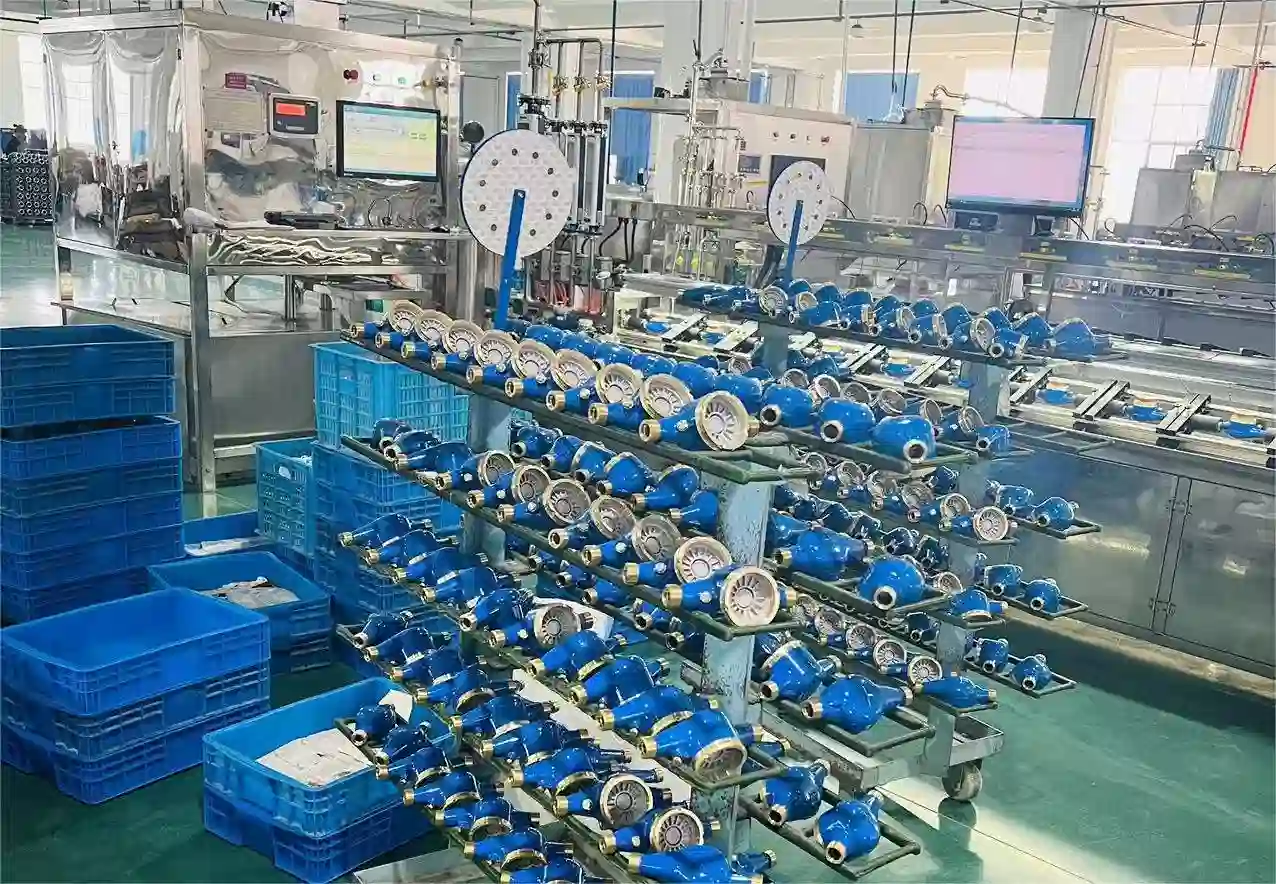
The production process of lead-free water meters involves several key steps, with the following processes being particularly important:
Material Selection and Preparation: Use copper alloys (such as C69300, C87850, etc., low-lead or lead-free copper alloys) and high-performance plastics (such as PPS, POM, Nylon) to ensure lead content meets standards. Materials should be analyzed for composition upon purchase to ensure compliance with lead-free standards.
Precision Casting and Machining: Utilize advanced precision casting technologies (such as precision casting and die casting) and CNC machining techniques to ensure the dimensional accuracy and surface quality of components. Processing parameters should be strictly controlled to reduce processing stress and surface defects.
Heat Treatment and Surface Treatment: Perform heat treatment (such as quenching, tempering) on metal parts to improve their mechanical properties, and apply surface treatments (such as nickel plating, chrome plating) to enhance corrosion resistance. Surface treatment processes should ensure uniform coatings with strong adhesion, free from peeling and flaking.
Assembly and Calibration: Strictly follow assembly processes to ensure the precision and reliability of component connections. After assembly, calibrate the water meter to ensure its measurement accuracy within the specified flow range meets standards.
Quality Inspection and Testing: Conduct comprehensive quality inspections on finished water meters, including material composition analysis, dimensional inspection, flow testing, pressure testing, and corrosion resistance testing, to ensure their performance and safety comply with relevant standards.
Testing Methods for Lead Free Water Meters
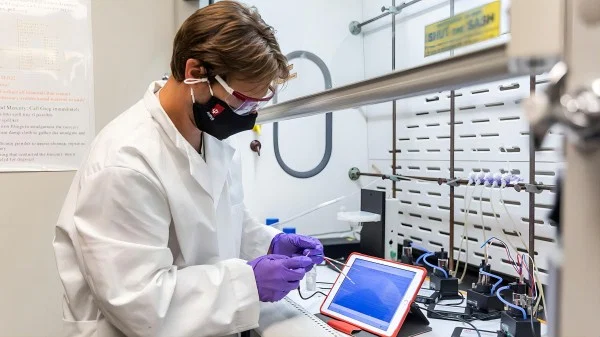
The testing methods for lead free water meters mainly include the following:
Acid Immersion Method: Immerse samples in an acidic solution to simulate the condition where water flows through the material, assessing the lead concentration in the solution under specific conditions (such as temperature and time).
Leaching Test: Measure the change in lead concentration in water samples after contact with the material over a specified period, commonly used to detect lead release from water meters and their components under actual usage conditions.
X-Ray Fluorescence (XRF) Analysis: Use X-rays to excite the sample and measure the emitted characteristic X-rays to determine lead content. This non-destructive testing method involves placing the sample in an XRF instrument.
Electrochemical Methods: Measure lead ion concentration through electrochemical reactions, using electrodes to react with the sample and detect current changes to infer lead concentration.
Spectral Analysis (such as Atomic Absorption Spectroscopy): Determine lead concentration by measuring the light absorption characteristics of lead in the sample. After pre-treating the sample, use a spectrometer for analysis, commonly employed for accurate measurements in laboratory settings.
Usage Considerations for Lead-Free Water Meters
Installation Considerations:
- Pipeline Cleaning: Ensure the pipeline is free of debris before installation to prevent damage to the water meter or impact its measurement accuracy.
- Correct Direction: The installation direction of the water meter should align with the water flow direction to avoid inaccurate measurements caused by reverse installation.
- Sealing Performance: Ensure sealing performance at all connection points during installation to prevent leaks.
Regular Maintenance:
- Periodic Calibration: Regularly calibrate the water meter based on usage frequency and environmental conditions to ensure measurement accuracy.
- Cleaning Filters: If the water meter has a filter, regularly inspect and clean it to prevent clogging that could affect measurement accuracy.
- Checking Protective Measures: Regularly check whether protective devices (such as protective covers and anti-freeze measures) are intact to ensure normal operation in harsh environments.
Environmental Requirements:
- Temperature Control: Avoid prolonged exposure to extreme temperatures to prevent material aging or damage.
- Anti-Freeze Measures: In cold regions, take effective anti-freeze measures (such as insulation covers and anti-freeze liquids) to prevent the water meter from freezing and cracking.
- Anti-Vibration Measures: In vibrating environments, take appropriate anti-vibration measures to prevent damage or measurement errors due to vibration.
Future Development and Challenges
Lead-free water meters face the following challenges in their future development:
Cost Pressure: Lead-free materials are usually more expensive. Finding ways to reduce costs while ensuring quality is a significant challenge.
Technological Innovation: With continuous technological advancement, lead free water meters need constant innovation to improve their performance and reliability.
Standardization: Different countries and regions have varying standards, complicating international trade. Promoting standardization and mutual recognition is a future development direction.
Conclusion
From material selection to production processes to product testing, BMAG ensures rigorous quality control at every stage, from raw material selection and production processes to water meter testing, guaranteeing that our lead free water meters fully comply with the standards of various countries. Providing customers with safe, high-precision, and long warranty lead-free water meters is a priority.
Lead free water meters, as a safe, environmentally friendly, and reliable product, have become a global trend in the water meter industry. Through continuous technological innovation and standard improvement, lead free water meters will play an increasingly important role in protecting public health and the environment. Manufacturers, regulatory bodies, and users need to work together to promote the widespread application of lead-free water meters and foster the healthy development of the water meter industry.
Related Articles
A Comprehensive Guide To Lead-Free Water Meters For Your Health and Home


