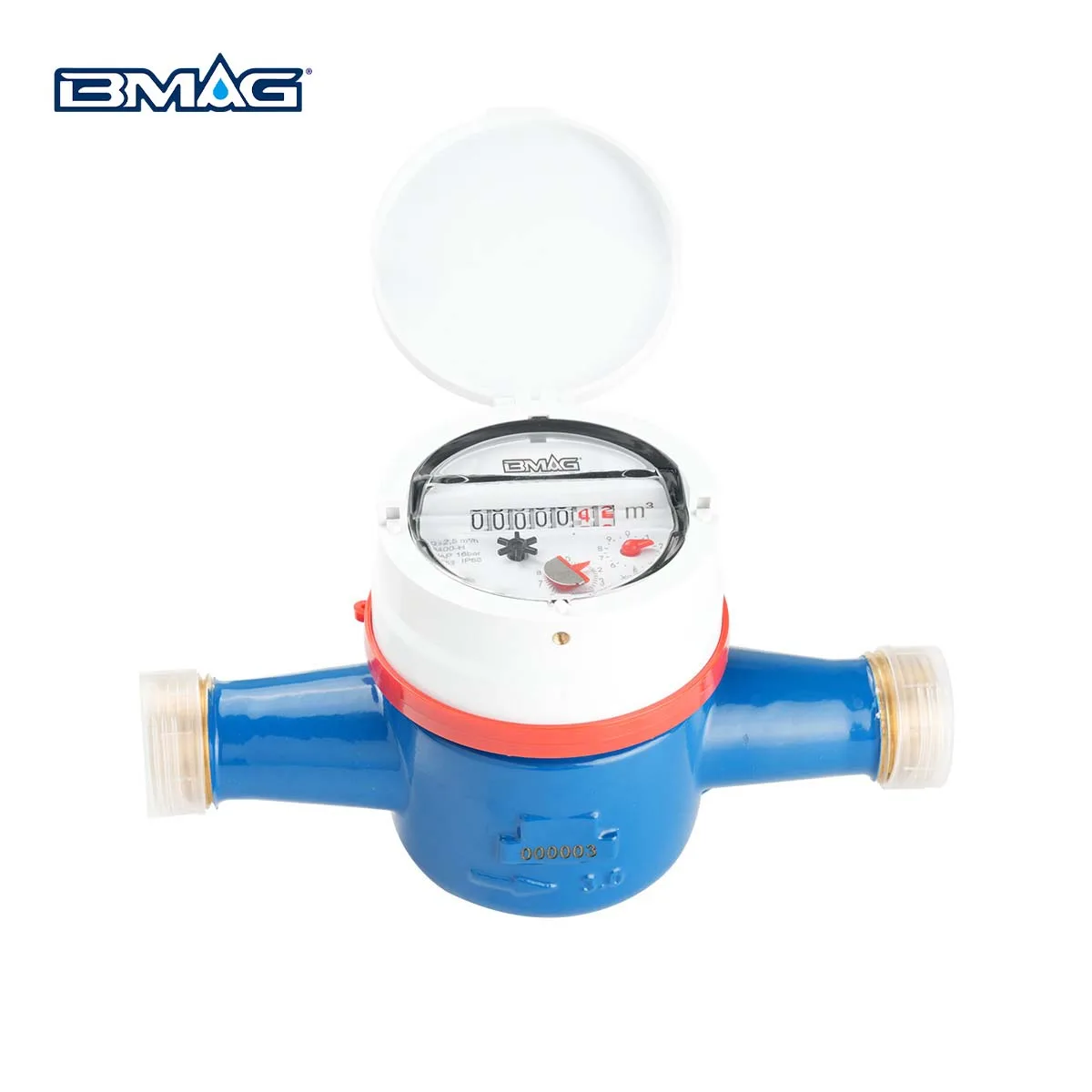
Whether you’re keen on monitoring your water usage to create a budget, spot leaks early to prevent water damage, or are simply curious about your water usage patterns, knowing how to read a residential water meter is essential. From locating your water meter to interpreting the readings on analog and digital meters, this guide covers everything you need to be a savvy homeowner when it comes to water management. Let’s get started!
Step 1: Located Your Residential Water Meter
The location of your water meter varies for different residential types, which is mainly affected by the building type, usage requirements and local regulations.
1. Single-family Residential
The water meter may be installed outside the house wall, garage entrance, yard or property boundary.
Sometimes the water meter is also installed indoors, such as in the kitchen, bathroom, attic or stairwell or basement near the water inlet.

2. Multi-family Residential (apartments, condominiums, etc.)
The installation location includes utility cabinets, hallways, corridors or pipe wells.
In some old communities, due to insufficient planning, the water meter may be installed directly at the location where the water inlet enters the home.

Click to learn more about the possible location of your water meter: https://www.bmagmeter.com/where-is-my-water-meter/
Note
Sometimes we need to prepare some tools to better read the water meter dial, such as:
- Large screwdriver or crowbar is needed to open the lid of the water meter box.
- Flashlight is needed to ensure sufficient light, especially at night or in low light conditions.
- For digital water meters with LED displays, a bright flashlight is also needed to activate the screen.
- When the water meter is located in the bush, we need gloves to protect hands from sharp plants or wild animals in the water meter box.
- Some water meter boxes may be flooded by rain, so tools are needed to transfer the accumulated water out.

Step 2: Read Your Residential Water Meter
Different residential water meters sometimes have different dials, and the reading methods may also vary.
1.Analog Water Meter
Analog water meters include two common types: straight-reading meters and round-reading meters.
Straight-Reading Meter
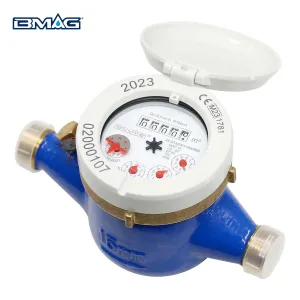
Straight-reading water meter directly displays water consumption through Arabic numerals on the water meter. We only need to read the numbers on the water meter from left to right. The numbers after the decimal point are generally used for more accurate measurement, and we usually don’t need to read them.

Round-Reading Meters/Round-Dial Water Meter
Round-reading water meter, also known as round-dial water meter, it has now been gradually replaced by straight-reading water meter types. These water meters have black pointers for the integer part (ones, tens, hundreds, etc.) and red pointers for the decimal part (0.001, 0.01, 0.1, etc.).
When reading them, start with the largest black pointer (like 10000, 1000, or 100) and move to the smaller ones (10, 1). Each pointer represents a digit in the reading.
Read each black pointer and note down its value. If a pointer is between two numbers, always take the lower value. For example, if it’s between 7 and 8, record 7.
Red pointers are often used for quality control or leak detection but are generally ignored for household water billing purposes.
2.Digital Water Meters
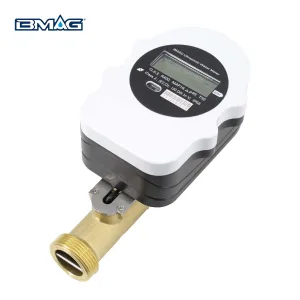
Digital water meters directly display water consumption through the display. Digital water meters usually display integer and decimal parts. For example, “366.89” means that the water consumption is 366 cubic meters and 89 cubic decimeters. For household water metering, usually only the integer part is concerned. “366.89” can be simplified to “367”.

3.Smart Water Meter with Communication Features
Some smart water meters support remote viewing of water usage data through mobile phone apps. Users only need to bind the water meter number to view water usage and fees anytime, anywhere.
Step 3: Understand Basic Measurement Units
When reading the water meter, common measurement units include Cubic Feet (ft³), Cubic Metres (m³), Lites (L), and Gallons (gal). These units can be converted in the following ways:
1 cubic meter ≈ 264 gallons
1 cubic meter ≈ 35.3 cubic foot
1 cubic foot ≈ 7.48 gallons
We can complete the conversion between different units more simply and quickly through some unit conversion web pages.
Step 4: Calculate Water Consumption
The premise of calculating water consumption is that we have previously recorded past water consumption.
Every time you record a water meter reading, make sure the reading is accurate and record the date.
For example, you can record the water meter reading once a day or a month, and then determine the water consumption by calculating the difference between the current reading and the last reading.
If you use a remote system, you can also get the readings electronically and save them to a database.
Step 5: Detect Leaks by Reading the Residential Water Meter
Many modern residential water meters are equipped with a leak indicator, also known as a low flow indicator.They are usually triangles, stars, wheels, or red pointers. If the indicator is still turning when all water-using devices are turned off, it indicates that there may be a leak.
If the water meter does not have a leak indicator, we can also monitor water consumption by regularly reading the water meter data.If the water meter reading changes when no water-using devices are in use, it may indicate a water leak. The specific steps are as follows:
- Turn off all water-using devices.
- Find the water meter and record the current reading.
- Wait for a while. It is usually recommended to wait for 15 minutes to an hour, and you need to make sure that all water-using devices are completely turned off.
- Record the water meter reading again after waiting.
- If there is a significant difference between the two readings, there may be a water leak.