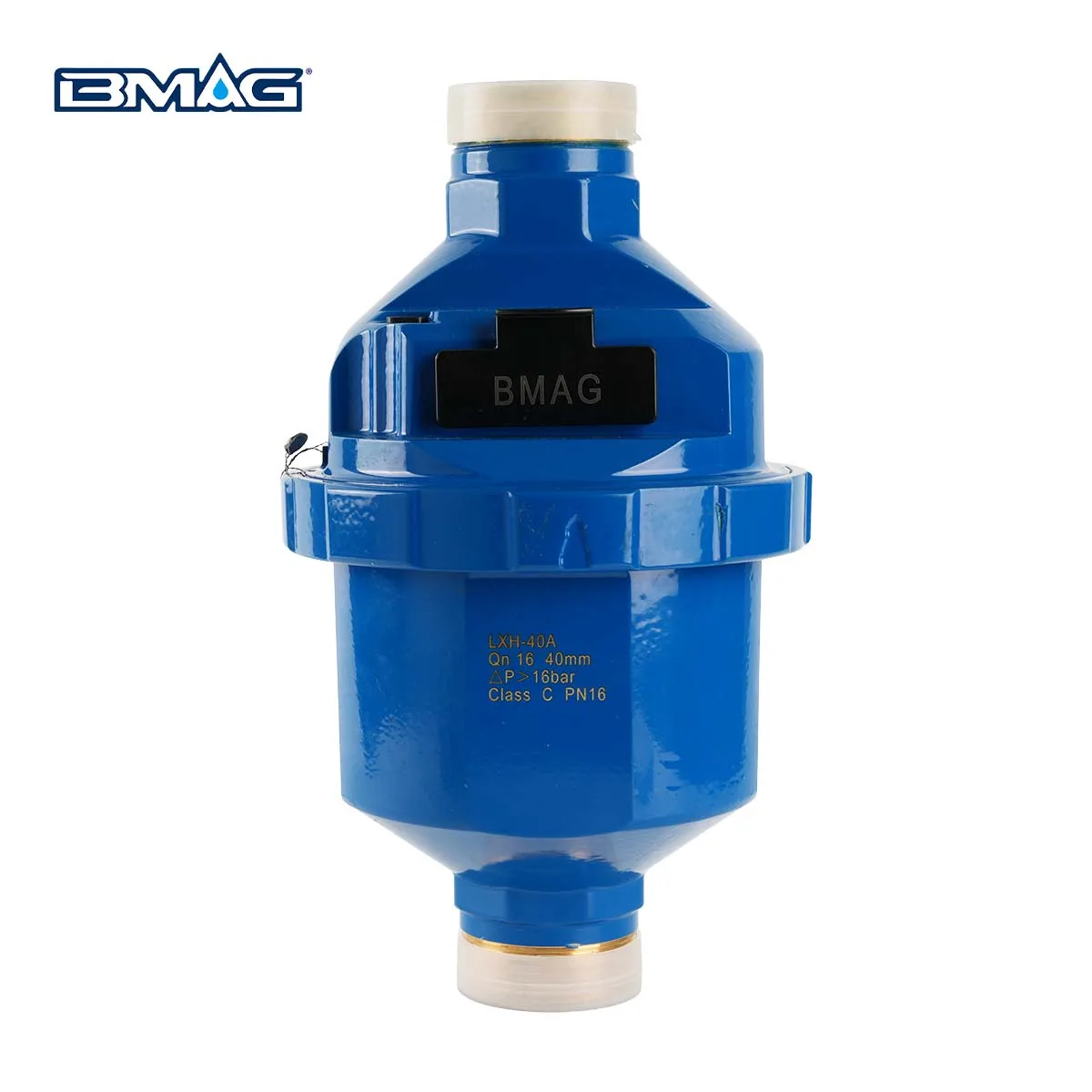
Residential water meter is a device used to measure the flow of water into a residence and is usually installed near the main water supply line of the residence or indoors, such as in a basement or utility room. The main function of these water meters is to accurately measure the household’s water consumption for billing purposes and to promote efficient use and conservation of water resources.
Key Components of Residential Water Meters
Before explaining how residential water meters work, let’s briefly understand their key components.
Measuring Chamber: The core component that measures water flow using an impeller, disk, piston, or ultrasonic sensor.
Register/Display Unit: The display unit is used to display the measured amount of water. The measurement results are converted into readable data, which can be displayed mechanically or digitally.


Transmission Device: The transmission device is used to transmit the movement in the measuring chamber to the display unit. In smart meters, transmit data wirelessly for remote reading and management.
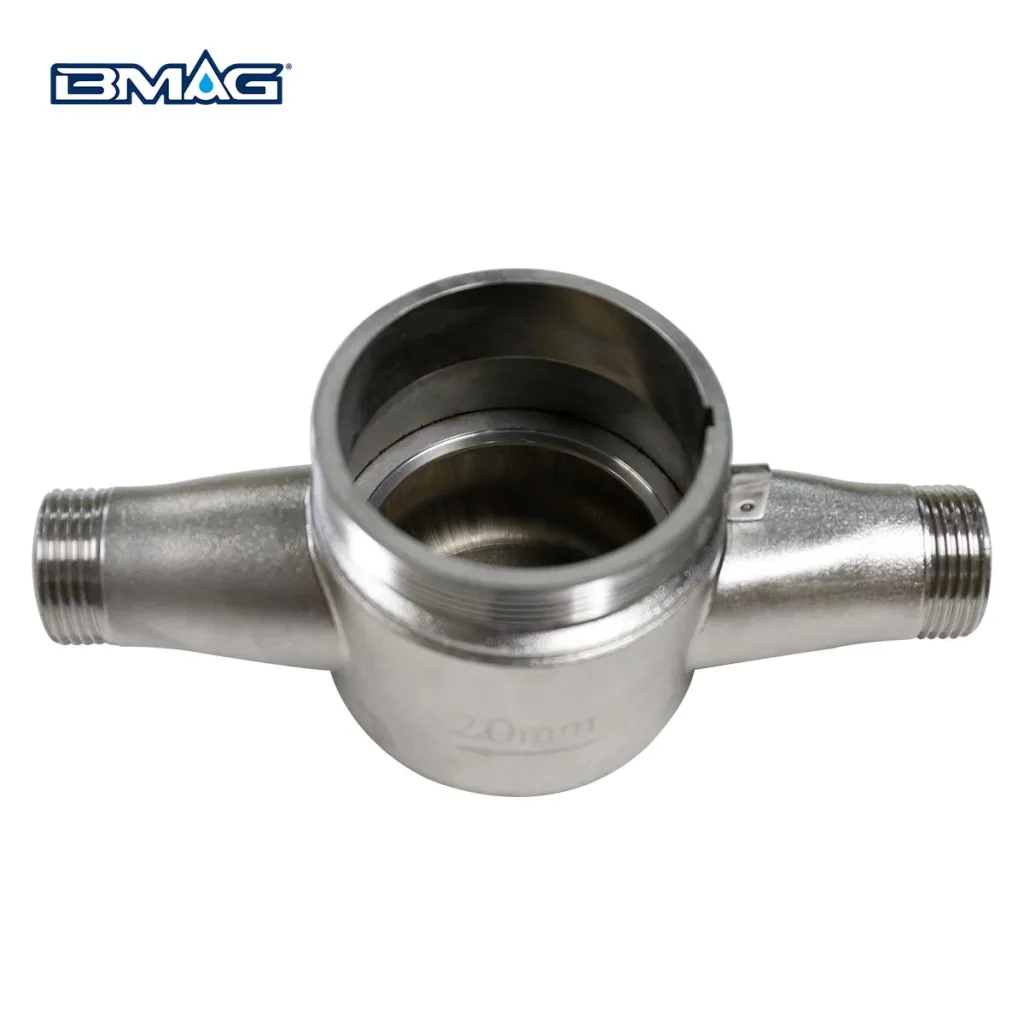
Water Meter Body: The water meter body is usually made of brass, cast iron or plastic, it is used to protect the internal mechanical structure and connects to the water supply pipe.


How Residential Water Meters Work
Water Flow Measurement
Mechanical and electronic residential water meters measure water flow through different technologies.
The water flow measurement principle of mechanical water meters is mainly divided into two types: velocity type and volumetric type.
Velocity type residential water meters usually use water flow to drive the rotor to rotate, thereby recording water consumption. For example, the rotor type water meter uses water flow to impact the impeller to make it rotate, and records the number of revolutions of the impeller through the gear reduction mechanism to calculate the cumulative flow.
Common volumetric residential water meters include rotary piston type and nutating disc type water meters. The rotary piston type water meter uses water flow to drive the piston to move in a closed volume chamber. Each time the piston moves a known volume, the water consumption is measured by counting the number of times these volumes move. The nutating disc type water meter uses one or more discs to nutate (i.e. swing up and down) under the action of water flow, and measures the water consumption by counting the number of swings of the disc.
Electronic residential water meters use ultrasonic sensor technology to measure water flow velocity or volume, and then convert these data into electrical signals for processing and display.
Display Type
There are two main types of display for residential water meters: analog and digital.
Analog water meters usually use pointer displays, and users can read water consumption by observing the position of the pointer. This type of water meter is intuitive but less accurate.
Digital water meters display water usage directly on the display, and the readings are accurate and easy to understand. In addition, some smart water meters also have LCD displays or pulse output functions, which can provide more detailed water usage information.
Leak Detection
Leak detection is one of the important functions of water meters.
Users can determine whether there is a leak by observing whether the small triangle or gear on the water meter rotates when no water is used. This mechanical indicator is usually used in analog water meters and rotates when water flows through, helping users identify potential water leaks.
In addition, smart water meters can automatically detect abnormal water use through data analysis and real-time monitoring technology, and promptly detect and alert users to potential leaks. The data analysis function of smart water meters can monitor changes in water consumption in real time and issue alarms when abnormalities are detected, helping users to take quick action.
Data Transmission
Modern smart residential water meters have data transmission functions, which can transmit water consumption data to cloud platforms or monitoring centers through wireless communication technology. This function not only improves management efficiency, but also provides users with real-time water consumption trend analysis and historical data query capabilities.
Smart water meters monitor water flow speed and volume in real time through built-in sensors and convert these data into electrical signals. These signals can be connected to data acquisition devices for remote monitoring and management. For example, some pulse water meters convert water flow into pulse signal outputs, which can be connected to data acquisition devices for remote monitoring and management.
The data transmission function of smart water meters mainly relies on modern wireless communication technologies, such as GPRS, NB-IoT, LoRa, M-BUS, RS485, etc. These technologies enable water meters to transmit data to remote servers in real time and stably, thereby supporting the intelligent management of water resources. Through these communication technologies, smart water meters can automatically collect water volume data and transmit it to the cloud for remote monitoring and management.
In addition, smart water meters can also process and analyze the collected data through the cloud platform to extract valuable information, such as water consumption peaks, abnormal conditions, etc. Users can view and manage water consumption through mobile applications or web terminals to better manage their water consumption behavior.